


Site Tour with Test Users
Choose a test user to login and take a site tour.
Choose a test user to login and take a site tour.


9 minutes, 40 seconds
-9 Views 0 Comments 0 Likes 0 Reviews
Customer expectations are changing as digital services become part of everyday life. People use different applications to book transportation, order food, purchase groceries, make payments, and access home services. Switching between multiple platforms can create friction for users and make it harder for businesses to maintain customer engagement.
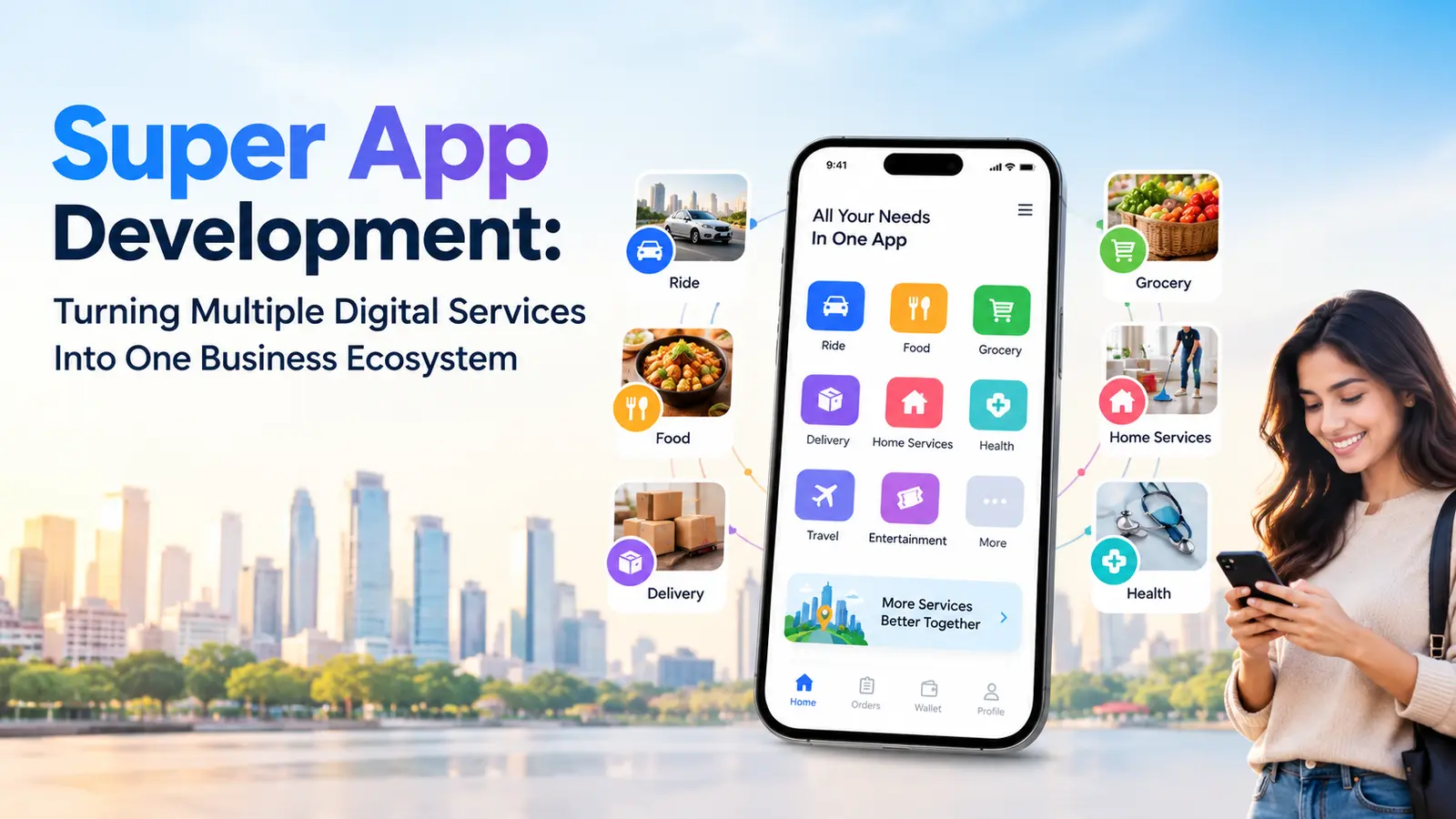
This is where super app development creates a valuable opportunity. A super app brings multiple services together within a single digital platform, allowing users to access different features through one application. For entrepreneurs, startups, and established companies, this model can open new revenue opportunities, strengthen customer retention, and support business expansion.
Rather than building an application around a single transaction, businesses can develop a connected ecosystem that serves customers across several daily needs.
A traditional mobile application typically focuses on a specific service, such as taxi booking, food ordering, or grocery shopping. A super app extends this concept by integrating multiple services into one application with a shared user experience.
For example, a mobility business could begin with ride-hailing and later introduce parcel delivery, vehicle rentals, and roadside assistance. Similarly, a food delivery company might expand into grocery ordering, pharmacy delivery, and other local services.
The objective is not simply to add more features. It is to create a connected platform where services complement one another and encourage customers to return for different needs.
Successful super app development requires careful planning around user experience, service integration, payment processing, scalability, and operational management.
The opportunity for a super app depends on local customer behavior, existing competition, and the availability of reliable service providers. Businesses should identify specific market gaps before investing in a multi-service platform.
1. Ride-hailing and local mobility
Transportation businesses can expand beyond passenger rides by integrating bike taxis, car rentals, corporate transportation, and parcel delivery. This approach allows operators to serve different customer segments through a shared digital infrastructure.
2. Food and grocery delivery
Restaurants, grocery retailers, and local delivery operators can combine ordering, delivery tracking, digital payments, and loyalty programs. A unified platform can help businesses build stronger customer relationships and create additional purchasing opportunities.
3. Home and professional services
Customers frequently search for reliable professionals for cleaning, repairs, beauty services, and other household requirements. Integrating service discovery, appointment scheduling, booking management, and payments can help businesses coordinate these services through one application.
4. Digital payments and loyalty programs
Integrated payment options and reward systems can simplify transactions across service categories. Depending on local regulations and technical requirements, businesses may also explore partnerships with licensed payment providers to support additional financial features.
These opportunities demonstrate how a super app can evolve around a specific audience instead of attempting to serve every market from the beginning.
A successful multi-service platform requires more than an attractive interface. Its technical foundation must support multiple service workflows without compromising reliability.
Key features include:
Unified user registration: Allow customers to access available services through a consistent account experience.
Multi-service booking: Support different booking processes for transportation, deliveries, appointments, and other services.
Integrated payment options: Provide appropriate payment methods across service categories.
Real-time tracking: Display relevant booking and delivery updates where supported.
Centralized administration: Manage users, providers, commissions, transactions, promotions, and service performance.
Analytics and reporting: Monitor customer behavior, order volumes, repeat usage, and service-level profitability.
Scalable architecture: Support new services, integrations, and higher transaction volumes as the business grows.
Businesses should also prioritize data protection, access controls, secure payment handling, and compliance with applicable regulations.
Building every service at once can increase costs, operational complexity, and time to market. A phased strategy gives businesses an opportunity to validate demand before expanding their service portfolio.
Step 1: Identify a focused market. Research customer needs, competitor offerings, service availability, and the problems existing platforms fail to solve.
Step 2: Select an initial service category. Start with a service that has clear demand and a practical path to acquiring customers and providers.
Step 3: Develop a minimum viable product. Introduce the essential booking, payment, management, and communication features required to test the business model.
Step 4: Measure actual performance. Track customer acquisition costs, repeat bookings, service completion rates, provider availability, and contribution margins.
Step 5: Expand based on evidence. Introduce complementary services when customer behavior and operational capacity support expansion.
This approach helps entrepreneurs manage investment risk while building a foundation for long-term platform growth.
A multi-service application can generate revenue through several channels, depending on its audience and business structure.
Transaction commissions can provide income from bookings or orders completed through the platform. Delivery or convenience fees may apply to eligible transactions. Subscription plans can offer benefits to frequent customers, while sponsored placements and promotional campaigns can create advertising opportunities for participating businesses.
Some platforms may also earn revenue from business partnerships or specialized service packages.
However, adding multiple revenue streams does not automatically guarantee profitability. Businesses must evaluate provider incentives, customer willingness to pay, operating expenses, and the cost of maintaining each service category.
A sustainable super app business model balances monetization with consistent service quality and customer value.
Organic search can help a super app attract users and business partners who are actively researching relevant services. A structured SEO strategy should reflect the platform's actual offerings and the search intent of its target audience.
Start by targeting the primary keyword “super app development” on a dedicated service page. Support it with related terms such as “super app development company,” “multi-service app development,” “super app business model,” and “super app features,” where each term fits the page's content and purpose.
Create informative supporting articles around topics such as super app development costs, essential features, revenue models, industry use cases, and platform scalability. Link these articles naturally to relevant service pages using descriptive anchor text.
Technical SEO also matters. Ensure important pages can be crawled and indexed, implement a logical site structure, optimize mobile performance, and use descriptive page titles and meta descriptions. Add appropriate structured data only when the page qualifies for it.
Most importantly, publish original content that answers real business questions. Practical comparisons, implementation considerations, and industry-specific examples can help attract qualified visitors rather than traffic that has little commercial intent.
Super app development offers businesses a way to connect multiple digital services within a unified platform. Its potential comes from solving related customer needs, creating convenient user experiences, and developing complementary revenue opportunities.
For entrepreneurs and established companies, the most practical path is to begin with a clear market opportunity, validate demand, and expand gradually using measurable results. Combined with a reliable technical foundation and a focused SEO strategy, this approach can support sustainable growth in the evolving multi-service application market.


Share this page with your family and friends.