The annoyance that sent me looking was a corner that lifted off my shoulder within an hour, curling like a dry leaf and catching on my shirt every time I reached for a shelf. A Muscle Plaster Factory settles things I had never thought about, such as how wide each piece should be, whether the tips are squared or rounded, and how far a roll runs before it gets awkward to carry, and those choices show up in the first few minutes of wear.
Width is the first thing the eye notices. A narrow strip suits a wrist, a finger or a small joint, while a wide one covers a calf or the muscles beside the spine without several overlapping lengths, and a strip wider than my palm looks bulky on a forearm yet ordinary across a thigh. Length works the same way, since a short one leaves bare gaps and an overlong one has to be folded or trimmed before it reaches its place.
Rounded tips make a visible difference. A square tip has sharp points that catch on sleeves and lift at the first sweat, whereas one trimmed into a gentle arc stays flat for longer, and I have seen this on my own arm after a long walk, the squared one peeling at both points while the rounded one held down. Home trimming is a small craft in itself, and snipping the corners with kitchen scissors before application takes a few seconds.
The sample on my desk came from Zhusi, a Wenzhou maker of healthcare products for sports, medical, personal daily use, animal health, tattoo and beauty customers, and beside it lay a cotton roll in a muted tone with a fine woven grain that you can see in raking light and feel under a fingertip.
Color is where design meets mood. Beige, black, blue and bright pink all turn up on shelves, and the choice changes how a strap looks under a T-shirt or beside a swimsuit, since a skin tone nearly vanishes while a vivid one becomes part of the outfit. Some wearers like a visible stripe as a badge at a race, and others pick a shade close to their complexion so it passes unnoticed at the office.
Craftsmanship shows in the cut. A clean die cut leaves a smooth border without loose threads, the weave lies straight across the cloth, and the adhesive layer reaches right to the border instead of stopping short, a detail I check by holding a length up to a window and running a thumbnail along the side. Perforations in the backing paper make it easy to tear a piece off by hand, and a backing that splits down the middle lets you peel outward from the center without touching the sticky face.
How it fits the body depends on shape as much as size. A fan cut, where one end is split into several narrow tails, spreads across a swollen joint without wrinkling, an I-shaped one follows a straight muscle, and a Y shape forks around the base of a shoulder or the back of a knee. I lay the anchors down without tension and stretch only the middle very lightly, because a piece pulled tight at the anchors wrinkles the skin and lifts sooner, and a knee bent during application leaves room to move afterward.
Packaging bulk matters in a gym bag, where a wide spool takes up the space of a water bottle while a slim one slides into a pocket, and a sealed wrapper keeps the border clean until needed. I once found an unwrapped spool at the bottom of a backpack with lint stuck all along its side, a reminder that the wrapper is part of the design too.
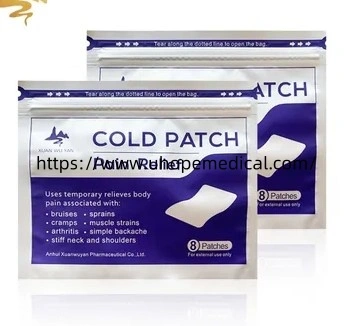
The company at https://www.uhopemedical.com describes itself as a developer of personalized healthcare products, and on my desk right now sit a trimmed sample with softly arced ends, a few curled scraps and a half-peeled backing sheet. A Muscle Plaster Factory can offer plenty of sizes, styles and colors, yet nothing printed on a wrapper says how a given strip will behave on a sweaty back during a long run, and a tidy outline still has to be tried on the body.





Share this page with your family and friends.