


Site Tour with Test Users
Choose a test user to login and take a site tour.
Choose a test user to login and take a site tour.


7 minutes, 5 seconds
-24 Views 0 Comments 0 Likes 0 Reviews
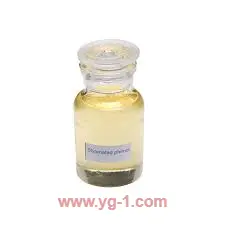
A rubber compound can begin reacting while it is still being mixed, even when the material has not reached the stage intended for curing. That timing difference matters because the compound needs to remain workable during preparation, shaping, and handling. An Antiscorch agent is a processing aid used to delay premature vulcanization, commonly called scorch, so the material does not begin forming its cured structure too early. Its function is related to reaction timing rather than simply changing the visible appearance of rubber. The interesting part is that this chemical intervention takes place within a mixture that may still look and feel ordinary to the operator.
Scorch refers to the early onset of vulcanization before the intended curing stage. Rubber processing involves several operations, and the compound may experience heat and mechanical action while being mixed or prepared for shaping. Chemical reactions associated with curing can respond to these conditions. When the reaction begins prematurely, the material may start developing an altered consistency that interferes with handling. An antiscorching additive is used within the formulation to influence this timing, allowing processing to take place before the planned curing operation. Its purpose is connected with the sequence of manufacturing stages rather than the finished component alone.
The underlying concept involves the relationship between chemical activity and processing conditions. Rubber formulations contain ingredients that participate in reactions during curing, while processing aids can influence how those reactions proceed. A scorch retarder works within this chemical environment, affecting the onset of premature reaction. The exact mechanism depends on the particular chemical composition, and different materials may interact with the surrounding formulation in different ways. Without a specified chemical identity, it would be inaccurate to assign a single reaction pathway or molecular structure to every antiscorching material.
During mixing, the compound experiences movement, friction, and temperature changes. These conditions can influence the state of the ingredients throughout the mixture, rather than affecting only its outer surface. An additive intended to delay scorch must function within that environment, where its distribution and compatibility with the formulation are relevant to its intended role. If the material is not dispersed consistently, different portions of a compound may experience different processing conditions. This is why the chemical's function cannot be considered separately from the preparation of the rubber mixture itself.
Taizhou Huangyan Donghai Chemical Co., Ltd. was founded in 1985 and specializes in rubber processing aids, including accelerators, antioxidants, and scorch retarders. These categories represent different functions within the processing system. Accelerators participate in curing reactions, antioxidants address oxidation-related processes, and scorch retarders relate to premature reaction timing. The distinction is important when examining a formulation because ingredients are selected according to their intended chemical roles. A material description should identify the relevant processing function without assuming that every compound uses an identical ingredient combination.
Reaction timing also depends on the conditions under which rubber is handled. Temperature, mixing history, and the composition of the formulation can influence the behavior of the compound during preparation. A scorch retarder is not a substitute for controlling processing conditions, and its use does not remove the need to consider the temperature or duration of each operation. Instead, it forms part of the chemical approach used to manage premature curing. The intended effect is connected with maintaining a suitable processing interval before the material enters its planned vulcanization stage.
There is a practical distinction between delaying the onset of curing and preventing curing altogether. The former concerns the timing of a reaction within the manufacturing sequence, while the latter would describe a different chemical objective. Rubber processing requires the compound to move through preparation and shaping before curing develops the intended structure. The retarding function is therefore associated with the earlier part of that sequence. Its interaction with the rest of the formulation is considered in relation to the conditions that the compound encounters during production, including heat exposure and the time spent in each operation.
When examining the technology behind this processing aid, the chemical category alone does not reveal every detail of its behavior. Composition, dosage, compatibility, and operating conditions are formulation-specific considerations, and exact values cannot be assumed without product information. Chemical suppliers may handle different processing materials within a wider supply system, while rubber manufacturers determine their use within individual production recipes. The distinction between an additive's general purpose and its specific technical characteristics is important when reading material descriptions or discussing processing requirements.
On a mixing floor, the difference between an unprocessed compound and one beginning to scorch may be noticed through resistance against the mixer, a change in texture, or material that no longer moves as expected. Those observations are connected with the condition of the mixture, not a complete explanation of its chemistry. The Antiscorch agent is intended to influence premature reaction timing, while the planned curing stage remains part of the production sequence. Beside a batch record, the https://www.yg-1.com name sits on a chemical material reference, and a rubber sample rests on the metal tray with a narrow ridge pressed into its surface by the edge of a spatula.



Share this page with your family and friends.