


Site Tour with Test Users
Choose a test user to login and take a site tour.
Choose a test user to login and take a site tour.


7 minutes, 59 seconds
-24 Views 0 Comments 0 Likes 0 Reviews
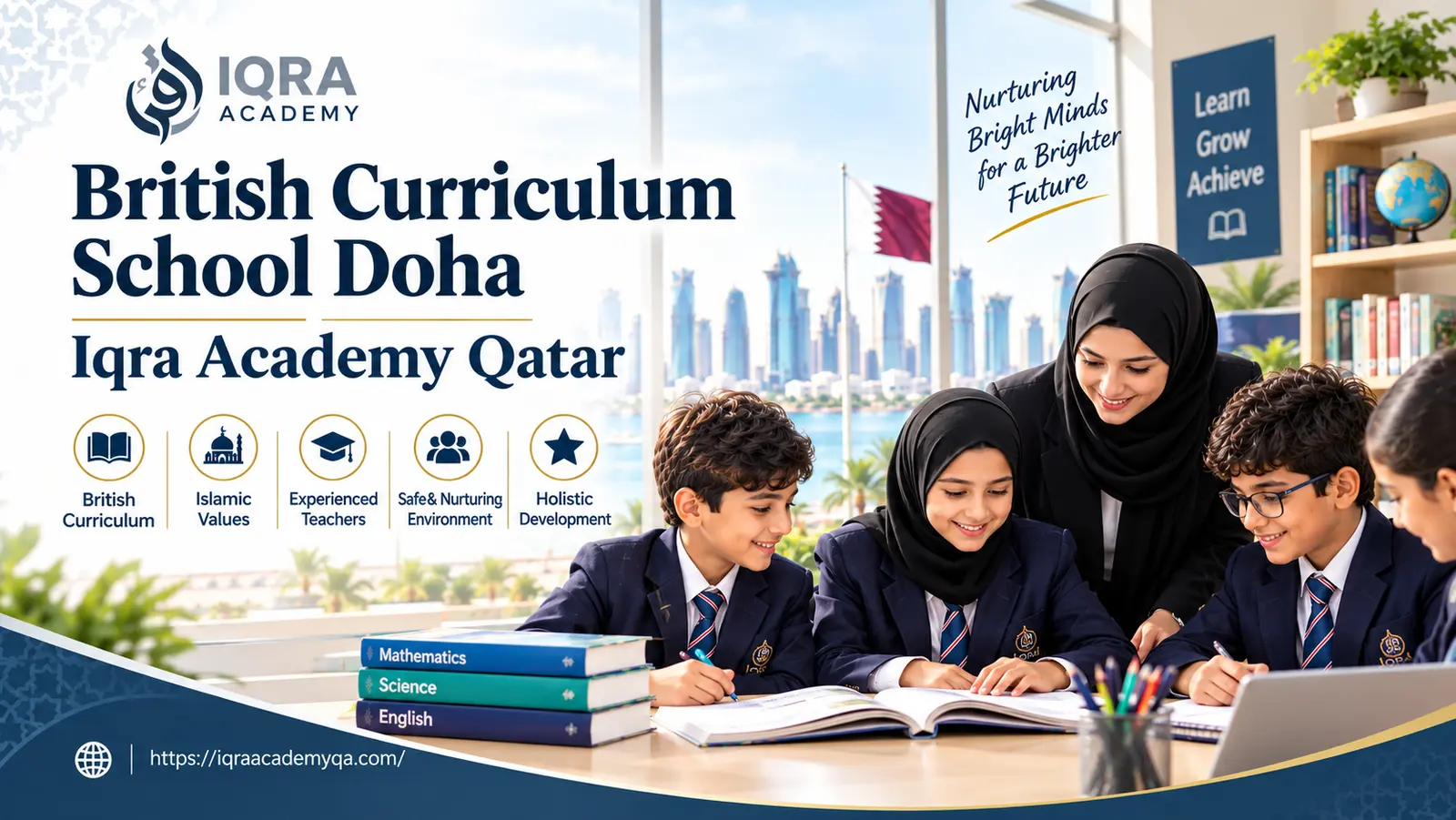
If you're a parent in Doha, you've probably heard the phrase "British curriculum" so often that it has started to blur into every other school brochure. Everyone claims it. Not everyone explains what it actually means for your child on an ordinary Tuesday morning. So let's talk about that, plainly.
The British curriculum follows a clear path. Children begin in the Early Years Foundation Stage, move through Key Stages 1 to 3 in primary and lower secondary, and then work towards IGCSEs and A Levels. Each stage builds on the one before it, so a child isn't left guessing what comes next.
What parents often like about this structure is how steady it feels. Reading, writing and number skills are built early and revisited often. Children are encouraged to explain their thinking rather than just land on the right answer. By the time they reach secondary school, they know how to research, argue a point and manage their own revision.
There's also the practical side. IGCSEs and A Levels are recognised by universities around the world, which matters in a city where many families move between countries. A child who studies this way can pick up in another British-curriculum school with far less disruption.
A curriculum is only half the story. The other half is the place where your child spends most of their waking day.
For many Muslim families in Qatar, the question isn't just "Is it British?" but "Will my child feel at home there?" At Iqra Academy Qatar, the British curriculum sits inside an Islamic school environment. Children learn the same subjects they would anywhere else, but within a community where faith, manners and respect are part of daily life. Prayer, Arabic and Islamic studies aren't squeezed in as extras. They belong to the school day.
That blend gives children a strong sense of who they are. They can ask questions about science in the morning and about their faith in the afternoon, without feeling they have to keep the two apart.
Brochures only tell you so much, so it's worth seeing a school in person. A few things are worth paying attention to.
Watch how teachers speak to the children. Do they listen, or just instruct? Look at the work on classroom walls, because it tells you whether pupils are encouraged to think for themselves. Ask how the school tracks progress, and how often you'll hear about it. Ask about class sizes and how the school supports children who need extra help, as well as those who are ready for more of a challenge.
It's also fair to ask how the school handles Arabic and Islamic studies alongside the British subjects. A good school will have a clear, confident answer and won't make it sound complicated.
Islamic school admissions in Doha can feel like a maze when you're doing it for the first time, especially if you're also settling into a new country. The good news is that most schools follow a similar pattern.
You'll usually start with an enquiry, then a visit or meeting with the admissions team. Your child may be invited for a short assessment or an informal chat, mainly so the school can understand where they are and place them in the right year group. You'll then be asked for documents such as previous school reports, the child's passport and Qatar ID, and birth certificate. Once everything is in order, you'll receive an offer.
One practical tip: start early. Places in popular year groups fill up, and having a few months to prepare makes everything calmer for you and your child. If you're unsure which documents you need, ask the admissions team directly. They would much rather answer a question now than chase a missing form later.
Even a happy child can feel nervous about a new classroom. Talk about the change openly, visit the school together if you can, and let them meet their teachers before the first day. Small things help: a familiar water bottle, a favourite pencil case, a chat on the drive home about the best part of the day. Most children find their feet faster than their parents expect.
Is a British curriculum school in Doha only for British families?
Not at all. Families from many nationalities choose the British curriculum because it's widely recognised and easy to continue elsewhere. What matters is that your child is comfortable learning in English.
Will my child still study Arabic and Islamic studies?
At Iqra Academy Qatar, yes. These subjects are a regular part of the timetable alongside the British curriculum subjects.
When should I apply?
As early as you can. Applying a few months ahead gives you time to gather documents and gives the school time to plan your child's placement.
Can I visit before I decide?
Yes, and it's the best thing you can do. Seeing the classrooms and meeting the staff tells you far more than any prospectus.
Choosing a school is a big decision, and it's fine to take your time over it. If a British curriculum school in Doha with an Islamic ethos sounds like the right fit, get in touch with Iqra Academy Qatar to ask about admissions and arrange a visit. Seeing the school for yourself is the easiest way to know whether it feels right for your family.


Share this page with your family and friends.