


Site Tour with Test Users
Choose a test user to login and take a site tour.
Choose a test user to login and take a site tour.


12 minutes, 37 seconds
-3 Views 0 Comments 0 Likes 0 Reviews
Generating leads is no longer only about bringing visitors to a website or collecting email addresses. Businesses today need to respond quickly, understand what potential customers want, and continue the conversation until they are ready to take the next step.
This is where a WhatsApp AI chatbot can become useful.
WhatsApp allows businesses to communicate with potential customers through a channel they already use regularly. When artificial intelligence is combined with WhatsApp automation, businesses can handle initial enquiries, answer common questions, qualify leads, collect important information, and follow up with prospects more efficiently.
In this guide, we'll explain how a WhatsApp AI chatbot can support lead generation, how the process works, and what businesses should consider when using AI-powered conversations in 2026.
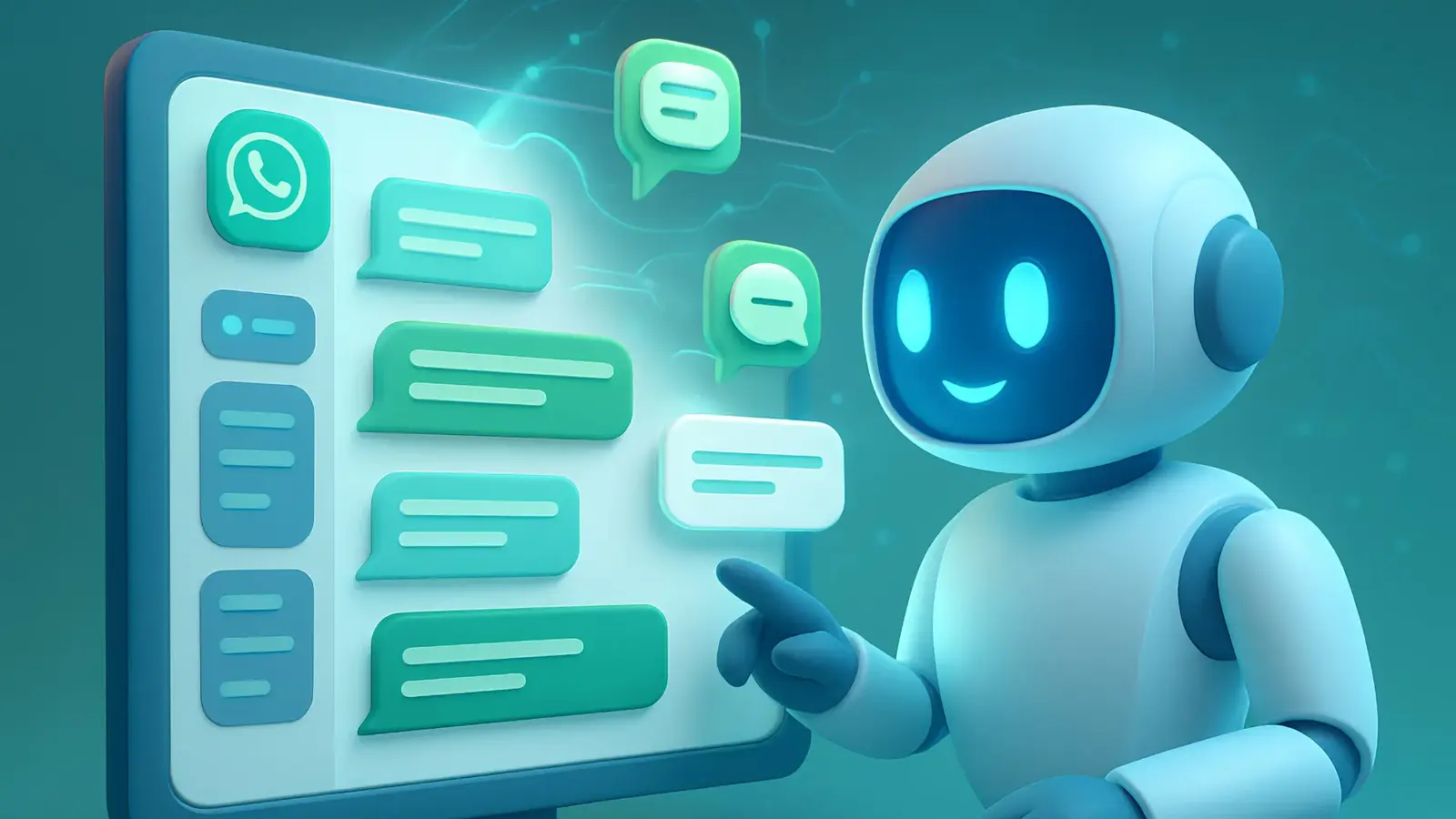
A WhatsApp AI chatbot is a conversational system that uses artificial intelligence to interact with customers on WhatsApp.
Unlike a traditional chatbot that only follows fixed rules or predefined buttons, an AI-powered chatbot can understand questions written in natural language and respond based on the information available to it.
For example, a potential customer may send:
“I need this service for my small business. How much will it cost, and how soon can I get started?”
Instead of requiring the person to select options from a menu, the chatbot can understand the enquiry and provide relevant information.
Depending on how it is configured, an AI WhatsApp chatbot can help businesses:
Answer customer questions
Capture lead information
Qualify potential customers
Recommend relevant products or services
Schedule appointments or demos
Send follow-ups
Update CRM systems
Transfer conversations to sales representatives
The goal is not simply to automate replies. The goal is to move relevant conversations closer to a business outcome.
A typical lead generation process using WhatsApp looks like this:
Website or Ad → WhatsApp Conversation → AI Qualification → Lead Capture → Follow-Up → Sales Team
For example, a business may run a digital advertisement with a “Chat on WhatsApp” button.
When a potential customer clicks the button, they can immediately start a conversation.
The AI chatbot can then ask relevant questions, such as:
What product or service are you interested in?
What is your business size?
When are you planning to get started?
What is your approximate budget?
Would you like to speak with a sales representative?
Based on the answers, the business can identify whether the person is a qualified lead and decide what should happen next.
This can help sales teams spend more time on serious prospects instead of manually handling every initial enquiry.
Speed can make a significant difference in lead generation.
When a potential customer contacts a business, they usually expect a response quickly. If they have to wait for several hours, they may contact another company instead.
A WhatsApp AI chatbot can handle initial conversations automatically and provide immediate responses to common questions.
This helps businesses engage potential customers while their interest is still high.
Not every enquiry is equally valuable.
For example, a software company may receive enquiries from:
Small businesses
Large enterprises
Students
Existing customers
Potential partners
The sales team may not need to handle all of these conversations in the same way.
An AI chatbot can ask qualifying questions and collect important information before transferring the conversation.
For example:
AI: What type of business do you run?
Customer: An e-commerce company.
AI: Approximately how many orders do you receive each month?
Customer: Around 5,000.
Based on this information, the lead can be categorised and sent to the appropriate sales workflow.
Traditional lead forms can sometimes feel long and inconvenient.
WhatsApp conversations can provide an alternative way to collect information.
Instead of asking someone to complete a large form, the chatbot can collect details during a natural conversation.
Depending on the business, this may include:
Name
Company name
Email address
Phone number
Product interest
Budget range
Location
Timeline
The conversation should remain relevant and avoid asking unnecessary questions.
The shorter and more useful the interaction is, the more likely customers are to continue.
Potential customers often have questions before becoming leads.
They may ask about:
Pricing
Features
Services
Availability
Implementation
Integrations
Delivery timelines
An AI-powered chatbot can provide answers using approved business information.
This helps customers understand whether the business is relevant to their needs before speaking with a sales representative.
However, businesses should ensure the AI has accurate and updated knowledge. Incorrect answers can damage trust and create additional work for the sales team.
Many leads do not convert during the first conversation.
A potential customer may be interested but need more time before making a decision.
Follow-up automation can help businesses continue the conversation at the right time.
For example:
Day 1: Initial enquiry and product information
Day 2: Follow-up with additional details
Day 5: Offer to schedule a demo or consultation
Day 10: Final follow-up if appropriate
The follow-up process should be relevant and should stop when a customer responds, converts, or no longer wants communication.
Good automation should feel helpful rather than repetitive.
Lead generation becomes more useful when customer information is connected to the systems your sales team already uses.
A WhatsApp chatbot can work with CRM and third-party tools to send lead information to the right place.
For example:
WhatsApp Conversation → Lead Qualification → CRM Update → Sales Notification
This can reduce manual data entry and help sales representatives access important information before joining the conversation.
Businesses should check whether their chatbot platform supports the CRM they already use or provides APIs and webhooks for custom integrations.
Both approaches can be useful, but they provide different experiences.
| Traditional Lead Form | WhatsApp AI Chatbot |
|---|---|
| Customer fills out fields | Customer has a conversation |
| Usually one-way | Interactive communication |
| Limited immediate answers | Can answer questions instantly |
| Information collected upfront | Information collected naturally |
| Follow-up happens later | Follow-up can be automated |
| Limited qualification | Can qualify leads through conversation |
A WhatsApp chatbot does not necessarily need to replace forms.
Many businesses can use both approaches depending on the customer journey.
For example, a website visitor can submit a form, while paid advertising campaigns can direct prospects directly to WhatsApp.
To get better results, businesses should follow a few important practices.
Decide what you want the chatbot to achieve.
For example:
Generate qualified leads
Book demos
Schedule appointments
Collect enquiries
Increase sales conversations
A clear goal makes it easier to design the right conversation flow.
Do not turn the chatbot into a long application form.
Ask only the questions needed to qualify or assist the customer.
Your chatbot should use reliable and updated business information.
Review its responses regularly and identify questions it cannot answer correctly.
Some conversations need a real person.
Make it easy for customers to speak with sales or support when necessary.
Monitor important metrics such as:
Number of conversations
Qualified leads
Response rates
Follow-up performance
Demo bookings
Conversion rates
Human handoffs
These insights can help businesses improve their chatbot over time.
For businesses looking to automate lead conversations, Wavoiq can support AI-powered WhatsApp interactions, lead qualification, automated follow-ups, human handoff, CRM integrations, campaigns, and analytics.
A typical workflow can look like this:
Customer Enquiry → AI Conversation → Lead Qualification → CRM Update → Follow-Up → Sales Handoff
The platform can help businesses manage conversations while keeping the sales team involved when human assistance is needed.
Wavoiq also supports integrations and automation options that can connect WhatsApp conversations with other business workflows. This can be useful for companies that want lead information to move between their messaging, CRM, and sales processes.
The right setup will depend on the business, its sales process, and the type of information it needs to collect from potential customers.
A WhatsApp AI chatbot can help businesses improve lead generation by making customer conversations faster, more organised, and easier to manage.
Instead of manually responding to every initial enquiry, businesses can use AI to answer common questions, understand customer requirements, collect lead information, qualify prospects, and automate relevant follow-ups.
However, successful automation is not about removing humans completely.
The best approach combines AI for repetitive and initial conversations with human support for complex questions and important sales opportunities.
As more businesses use conversational channels to engage customers, an AI WhatsApp chatbot can become an important part of a modern lead generation strategy.
The key is to choose a solution that fits your customer journey, integrates with your existing tools, provides accurate conversations, and helps your team turn more enquiries into meaningful business opportunities.
Looking to automate lead conversations on WhatsApp? Explore how Wavoiq can help your business manage AI conversations, lead qualification, follow-ups, CRM workflows, and human handoff in one connected process.


Share this page with your family and friends.