Suspension systems have a major influence on towing stability, cargo protection, and long-term trailer durability. Tandem Trailers commonly use either leaf spring equalizer systems or torsion axle configurations, with each design offering different advantages depending on hauling conditions and payload requirements.
The primary role of a trailer suspension system is to absorb road shock while distributing weight evenly across the axle assemblies. Without effective suspension control, heavy cargo can create excessive frame stress, unstable handling, and rapid tire wear. Industry axle references explain that tandem systems improve load distribution by allowing multiple wheels to share vertical forces during operation.
Leaf spring suspensions remain one of the most common tandem trailer designs. In this configuration, steel spring packs connect to equalizer linkages positioned between the two axles. As the trailer moves over uneven terrain, the equalizer transfers force between front and rear axles, helping maintain balanced wheel contact with the road.
Common benefits of leaf spring systems include:
Strong load-carrying capability
Lower replacement costs
Simple mechanical design
Broad parts availability
Good performance for commercial hauling
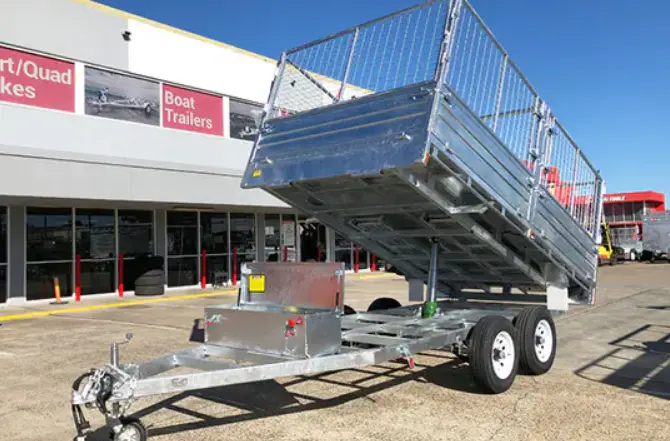
A standard tandem utility trailer may use dual 3,500 lb leaf spring axles with slipper springs and electric drum brakes. This configuration is frequently found in equipment transport, landscaping, and enclosed cargo applications.
Torsion axle systems operate differently. Instead of external leaf springs, torsion axles use internal rubber cords within the axle tube to absorb road movement. Each wheel moves independently, which can improve ride smoothness and reduce vibration transfer to sensitive cargo.
Advantages of torsion axle systems may include:
Reduced trailer bounce
Quieter operation
Lower vibration levels
Independent wheel movement
Cleaner under-frame appearance
However, torsion systems are generally more expensive than traditional leaf spring assemblies and may require full axle replacement rather than individual component repair.
Ride behavior becomes especially noticeable during highway towing. Tandem trailers equipped with properly balanced suspension systems tend to feel more stable over uneven pavement and during crosswind conditions. Several towing guides emphasize that dual axle setups often produce a calmer towing experience under heavier loads.
Suspension geometry also influences tire wear. Poor equalizer alignment, damaged spring hangers, or bent axle tubes can shift weight unevenly between wheels. Trailer repair discussions frequently mention irregular tire temperatures and repeated tire failures caused by suspension misalignment.
Operators should routinely inspect:
Spring hangers
Equalizer bushings
U-bolts
Shackles
Axle camber
Tire wear patterns
Loose suspension hardware can eventually affect tracking performance and braking stability.
Heavy-duty tandem trailers used for construction equipment often include reinforced suspension components such as:
7,000 lb axles
Double-eye leaf springs
Greaseable equalizer bolts
Heavy-duty shackles
Adjustable brake controllers
These systems are designed to handle repeated loading cycles and demanding operating environments.
Trailer suspension technology continues evolving as manufacturers explore smoother ride characteristics and improved efficiency. Some advanced transport systems are even researching energy recovery solutions integrated into trailer axle assemblies.
Whether using leaf spring or torsion configurations, proper suspension maintenance remains essential for towing safety and cargo protection. A well-balanced tandem suspension system can improve ride quality, extend tire life, and reduce stress on both the trailer frame and towing vehicle during long-term operation.





Share this page with your family and friends.