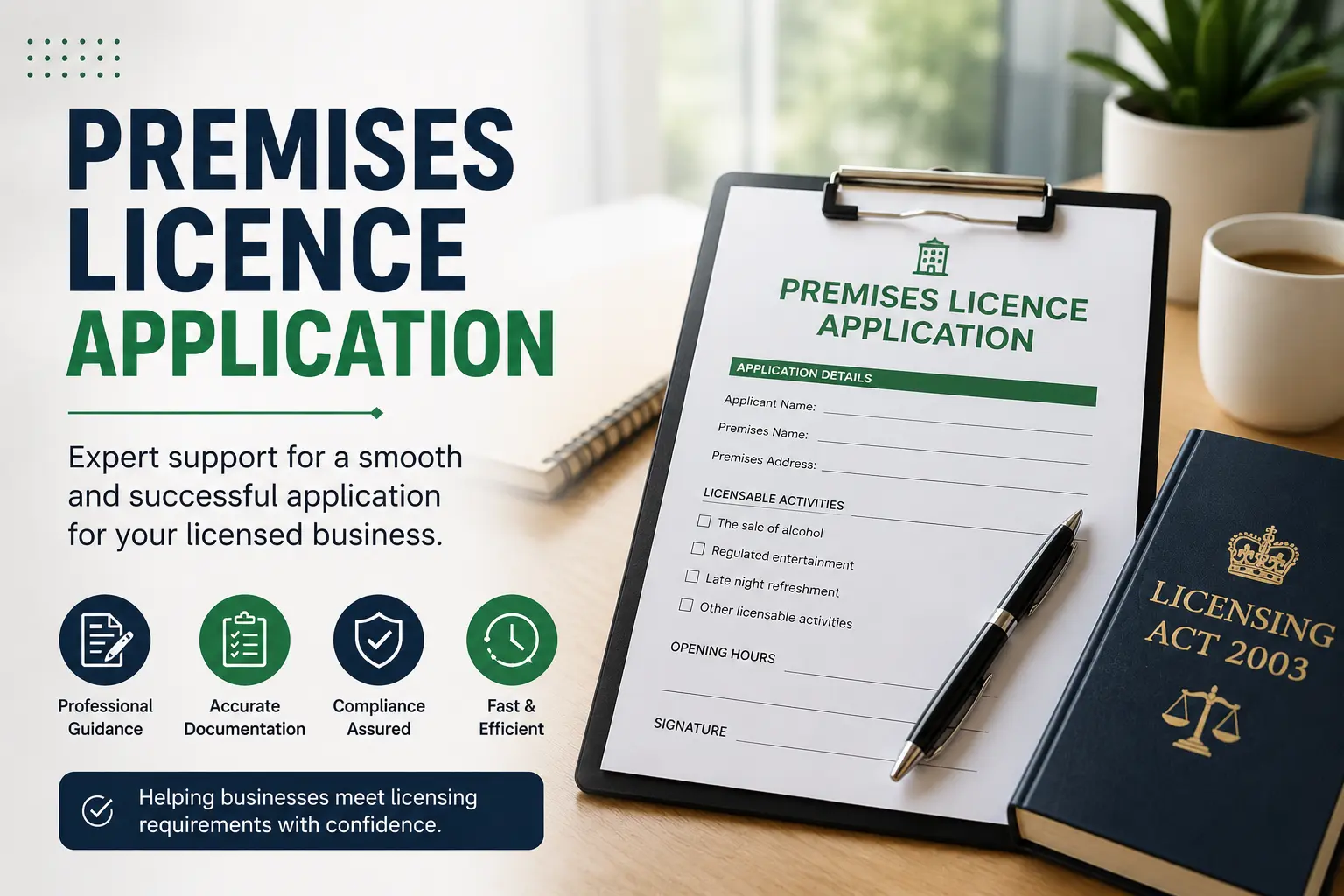
A premises licence application is the form a business sends to its local council to get permission to sell alcohol from a venue. It can also cover late-night refreshment and regulated entertainment. This process applies in England and Wales.
Who Needs a Premises Licence?
Any venue that sells alcohol to the public needs one. This includes pubs, bars, restaurants, shops, and clubs.
Venues that offer late-night food and drink or live entertainment may need one too. The licence belongs to the premises, not to a single person.
What Does the Application Need?
Councils ask for a set of documents with every application. Missing items can slow things down.
Here is what most applications include:
- A completed application form
- A plan of the premises
- An operating schedule
- A consent form from the proposed Designated Premises Supervisor
- The correct fee
- Proof of the right to work in the UK, if the applicant is an individual
What Is an Operating Schedule?
An operating schedule explains how a venue will run its licensable activities. It must describe the steps the business will take to support the four licensing objectives.
These objectives are preventing crime and disorder, public safety, preventing public nuisance, and protecting children from harm.
Why Does a Venue Need a Designated Premises Supervisor?
A Designated Premises Supervisor, or DPS, is the person in charge of alcohol sales at a venue. The applicant can be the DPS or can name someone else.
A DPS must hold a personal licence. Anyone aiming for this role can study for the APLH exam first.
What Happens After the Application Is Sent?
The council shares the application so others can respond. The business must display a notice at the premises for 28 consecutive days. It must also advertise in a local newspaper.
If nobody objects, the council grants the licence and posts it to the applicant.
How Much Does a Premises Licence Cost?
The fee depends on the rateable value of the premises. Higher value premises fall into higher fee bands. An annual fee is also due on each anniversary of the grant date.
What Mistakes Should Applicants Avoid?
Small errors cause most delays. Applicants should watch for these:
- Plans that are unclear or not to scale
- A vague operating schedule
- A missing DPS consent form
- Notices that are not displayed for the full 28 days
How Can INN Confidence Ltd Help?
INN Confidence Ltd offers support for business owners who want to get their paperwork right. It also provides personal licence training for anyone who plans to become a DPS.
Final Thoughts
A careful premises licence application saves time and avoids repeat work. With the right documents and a clear plan, business owners can move through each step with confidence.




Share this page with your family and friends.