


Site Tour with Test Users
Choose a test user to login and take a site tour.
Choose a test user to login and take a site tour.


11 minutes, 34 seconds
-12 Views 0 Comments 0 Likes 0 Reviews
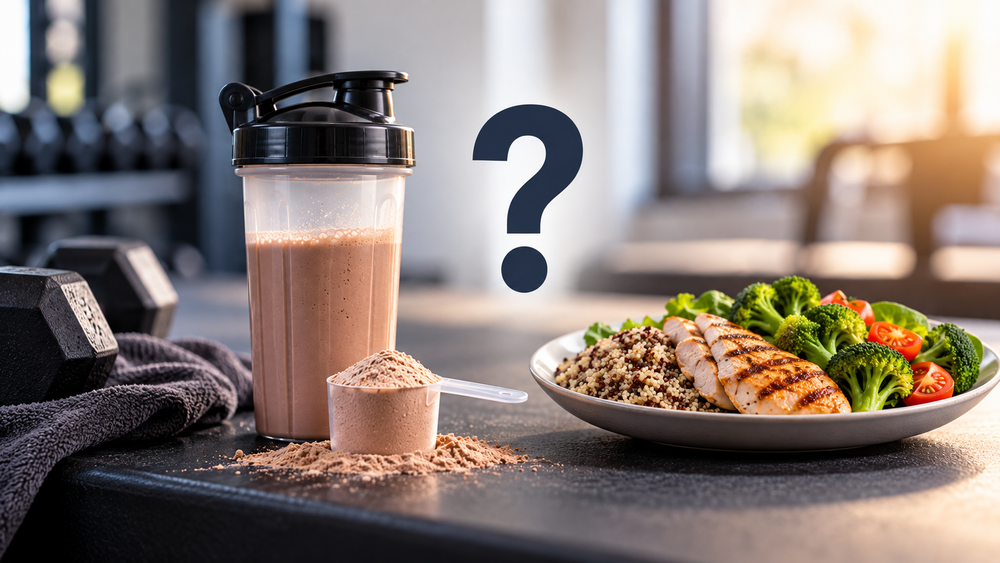
Building muscle requires enough protein, calories, and consistent strength training. Protein powder can help fill the gap when your diet doesn't provide enough protein. However, protein powder for muscle gain works best as part of a balanced diet and training routine. Whether you need additional calories depends on your current diet, activity level, and fitness goals. If you're struggling to gain muscle, reviewing your protein and calorie intake can help you identify what needs to change.
No. Protein powder can support muscle growth, but it cannot replace resistance training or a balanced diet.
Resistance training stimulates your muscles to adapt and grow. Protein supplies the amino acids your body uses to repair and build muscle tissue. Without an appropriate training routine, simply increasing your protein intake is unlikely to produce significant muscle growth.
Protein powder is best viewed as a convenient way to meet your daily protein needs. It works alongside regular exercise, balanced meals, and adequate recovery.
You do not always need to increase your calorie intake to build muscle. However, eating enough calories helps support training performance, recovery, and muscle development.
A calorie surplus means consuming more energy than your body uses. This can support muscle growth, particularly when you follow a consistent strength-training program. However, eating significantly more than you need can increase body fat without guaranteeing faster muscle growth.
Your calorie requirements depend on your body weight, activity level, training experience, and fitness goals.
Increasing your calorie intake may help if you struggle to gain weight despite consistent training and adequate protein intake.
Consider reviewing your food intake if you:
Struggle to gain weight despite following a consistent routine.
Find it difficult to eat enough food to support your workouts.
Experience low energy during training or struggle to recover between sessions.
These signs do not automatically mean you need more calories. Training quality, sleep, and consistency also affect progress.
If you want to gain muscle while limiting fat gain, increase your food intake gradually. Monitor your body weight and strength rather than making large dietary changes immediately.
Your total daily protein intake matters more than the number of protein shakes you drink. The International Society of Sports Nutrition suggests approximately 1.4 to 2.0 grams of protein per kilogram of body weight per day for most healthy, physically active individuals. Individual needs can vary depending on training and other factors.
For example, a person weighing 70 kg could use the following range as a general starting point.
|
Daily protein intake |
Amount |
|---|---|
|
1.4 g per kg of body weight |
98 g |
|
1.6 g per kg of body weight |
112 g |
|
2.0 g per kg of body weight |
140 g |
These amounts include protein from both food and supplements. They do not represent the amount you need to obtain from protein powder alone.
Eggs, dairy, fish, chicken, beans, lentils, and tofu can all contribute to your daily protein intake. Protein powder can help fill the gap when your regular meals do not provide enough.
People with kidney disease or other conditions affecting protein requirements should seek individualized medical advice before changing their intake.
Before choosing a supplement, assess your current diet. This helps you determine whether you need additional protein, more calories, or both.
Start by adding protein-rich foods such as eggs, yogurt, paneer, fish, chicken, beans, or tofu to your meals.
If you struggle to meet your protein target through food alone, protein powder can provide a convenient alternative. You can include it at breakfast, after a workout, or between meals.
Another protein shake may not solve the problem if your overall energy intake is too low.
Consider adding foods such as rice, oats, potatoes, whole-grain bread, nuts, seeds, or dairy to increase your calorie intake. Carbohydrates provide energy for training, while dietary fats contribute energy and support normal body functions.
Adding more supplements may not improve your results. Instead, review your training program and recovery habits.
Check whether you are gradually increasing the resistance or difficulty of your workouts. Also, make sure you get enough sleep and allow your muscles to recover between sessions.
Muscle growth takes time. Consistent training and appropriate nutrition matter more than frequently changing supplements.
Whey protein and mass gainers serve different purposes. The right option depends on whether you mainly need additional protein or more calories.
|
Feature |
Whey protein |
Mass gainer |
|---|---|---|
|
Main purpose |
Helps increase protein intake |
Helps increase calorie and protein intake |
|
Typical ingredients |
Primarily protein |
Protein and carbohydrates, sometimes fats |
|
Suitable for |
People who need additional protein |
People who struggle to eat enough calories |
|
What to check |
Protein per serving and ingredients |
Calories, protein, carbohydrates, and serving size |
Whey protein may be sufficient if you already eat enough calories but struggle to meet your protein needs. A mass gainer may be useful if you find it difficult to consume enough food to support weight gain.
Neither option is automatically better for muscle growth. Formulations and calorie content vary between products, so check the label before buying. Your overall diet and training routine should guide your choice.
There is no single time that works best for everyone. Meeting your daily protein needs and following a consistent training routine are more important than following a strict shake schedule.
You can take protein powder after a workout, between meals, or whenever it fits your eating routine. Protein intake around resistance training can support muscle protein synthesis, but your total daily intake remains important.
For example, if you finish training in the evening and eat a protein-rich dinner soon afterward, you may not need another shake immediately. If your next meal is several hours away, a protein shake can be a convenient way to increase your protein intake.
Even with adequate protein intake, certain habits can make muscle growth more difficult.
Relying on shakes instead of balanced meals: Protein powder does not provide every nutrient your body needs. Your diet should also include carbohydrates, healthy fats, vitamins, minerals, and fiber.
Eating too little or too much: Consistently consuming insufficient calories can make muscle gain more difficult. On the other hand, a large calorie surplus may increase body fat without producing proportionally greater muscle growth.
Ignoring training and recovery: Muscles need an appropriate training stimulus to adapt. Consistent strength training, adequate sleep, and sufficient rest between sessions help support progress.
Building muscle starts with understanding your protein requirements, calorie intake, and training routine. Focus on balanced meals, consistent strength training, and adequate recovery before deciding whether you need additional protein or more calories.
If you are considering protein supplements, QNT Sport India is one option to explore. Compare the nutritional information, ingredients, and serving size to determine whether a product fits your diet and training goals.
Yes. Some people, particularly beginners, can build muscle without increasing their calorie intake. However, adequate energy intake remains important, and a calorie surplus may help support muscle gain.
There is no fixed number. Calculate your daily protein needs and account for the protein you get from food. Use shakes only when they help you meet your target.
No. Protein powder can help beginners meet their protein needs, but muscle growth also requires resistance training, balanced meals, and adequate recovery.
Choose whey protein if you mainly need additional protein. Consider a mass gainer if you struggle to consume enough calories through regular meals.
You can aim to gain muscle while limiting fat gain. Adequate protein, progressive strength training, and an appropriate calorie intake can support this goal, although results vary with training experience and starting body composition.



Share this page with your family and friends.