


Site Tour with Test Users
Choose a test user to login and take a site tour.
Choose a test user to login and take a site tour.


7 minutes, 49 seconds
-14 Views 0 Comments 0 Likes 0 Reviews
Rubber products pass through several stages before they obtain the elasticity, strength, and dimensional stability expected from a finished material. Among these stages, vulcanization has a central role because it changes the structure of the compound through controlled crosslinking. A rubber accelerator can participate in this process by helping the curing reaction proceed within a practical processing range. DongHai has developed rubber additives for applications involving vulcanization, antioxidants, scorch retarders, plasticizers, adhesives, and other processing materials. The company explains that suitable accelerator systems can shorten curing time and influence the temperature required for vulcanization. But how does this chemistry actually affect curing speed?
The Relationship Between Curing and Reaction Speed
Uncured rubber is designed to remain workable during mixing, shaping, extrusion, calendaring, or molding. Once the compound enters a heated curing environment, chemical reactions begin to create connections between polymer chains. Sulfur-based systems can require assistance because the reaction between sulfur and rubber molecules is naturally slow under ordinary processing conditions. Accelerating components help activate the curing system and alter the rate at which crosslinks develop.
The purpose is not simply to make the reaction happen as quickly as possible. A practical formulation must provide enough processing time before crosslinking becomes significant, while still allowing the compound to cure within the required manufacturing window. This balance becomes particularly important when a product has a complicated shape, a thick section, or a demanding molding sequence.
Curing speed therefore needs to be considered together with scorch safety. If crosslinking starts prematurely, the compound may lose part of its processing flexibility before forming has been completed. Technical literature also identifies scorch behavior, cure rate, cure temperature, and final cure level as important characteristics when designing rubber formulations.
Different Accelerator Families Behave Differently
Accelerator selection depends heavily on the rubber compound and the required processing conditions. DongHai's technical information groups commonly used materials into families such as thiazoles, sulfenamides, thiurams, dithiocarbamates, guanidines, and thioureas. These families do not produce identical curing profiles.
Thiuram and dithiocarbamate materials are generally associated with rapid curing behavior. Such characteristics can be useful when a formulation requires a fast reaction, although the shorter processing margin means that compound design must account for scorch behavior. Thiazole materials can provide a different balance between reaction activity and processing stability, while sulfenamide systems are commonly used where delayed action is desirable.
This difference explains why simply choosing the fastest available additive does not necessarily produce a suitable manufacturing process. A compound intended for a thin molded component may have different requirements from one designed for a thick rubber article. Heat transfer, compound composition, molding conditions, and the desired physical properties all influence the appropriate curing profile.
Why Curing Speed Needs Careful Control
A shorter curing cycle can affect production planning because curing equipment spends less time processing each batch or molded component. DongHai notes that accelerators can reduce vulcanization time and temperature when used within a suitable formulation.
However, the relationship is not simply linear. Increasing accelerator concentration does not mean that every compound should be processed at a proportionally faster rate. Excessive activity may narrow the processing window, while an insufficient level may leave the curing reaction too slow for the intended production conditions.
The interaction between accelerator, sulfur, activator, polymer type, and other compounding ingredients should therefore be evaluated as a complete system. Mixing quality also matters because uneven additive distribution can produce differences in curing behavior inside the same component. A carefully balanced formulation can provide a predictable transition from a workable compound to a crosslinked rubber structure.
Application Conditions Matter
Rubber components used in tires, hoses, belts, cables, footwear, seals, mats, and other industrial products can have different curing requirements. DongHai's product information describes accelerator applications across natural rubber, synthetic rubber, latex, and various rubber goods.
A tire compound, for example, may require a curing system that considers heat generation, dimensional stability, mechanical properties, and production conditions. A latex article may require a different approach because the material is processed in another physical state. Thick rubber sections can also require controlled reaction development so that the interior and exterior reach suitable curing conditions without creating an undesirable difference in properties.
For this reason, manufacturers usually evaluate curing behavior through laboratory testing before transferring a formulation to production. Measurements can help identify the beginning of crosslink development, reaction rate, curing window, and final torque characteristics. These observations provide useful information when adjusting the formulation for a particular application.
Choosing a Suitable Supplier and Product
For purchasing teams, the selection process involves more than checking a product name. Chemical identity, physical form, compatibility, storage conditions, documentation, packaging, and application guidance can all affect procurement decisions.
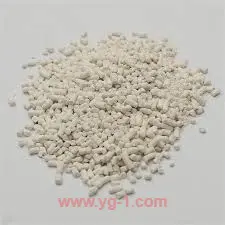
DongHai's rubber accelerator product range includes different chemical families and individual grades designed for specific processing situations. Its product pages provide technical descriptions for individual materials, including TMTD and PX, while the broader product category covers thiazole, dithiocarbamate, sulfenamide, thiuram, guanidine, thiourea, and morpholine accelerator groups.
For a manufacturer evaluating a new curing formulation, technical communication with the supplier can also be useful. Sharing the polymer type, intended product, processing method, curing temperature, expected cycle, and relevant physical-property requirements gives the supplier a clearer basis for discussing suitable grades. This approach can reduce unnecessary trial-and-error during compound development.
Manufacturers interested in different grades and application information can review the product range at https://www.yg-1.com/, where DongHai presents its rubber accelerator products alongside technical information and related rubber processing materials. The company also identifies itself as a manufacturer of rubber additives, with production experience covering accelerators, antioxidants, scorch retarders, plasticizers, adhesives, anti-fatigue agents, and other processing aids.



Share this page with your family and friends.