


Site Tour with Test Users
Choose a test user to login and take a site tour.
Choose a test user to login and take a site tour.


7 minutes, 33 seconds
-19 Views 0 Comments 0 Likes 0 Reviews
Food delivery demand has created opportunities for businesses beyond established online ordering platforms. Yet entering this industry requires more than connecting restaurants with customers. New operators must identify where current services fall short, determine which customers remain underserved, and build a model that can generate repeat orders without excessive operating costs.
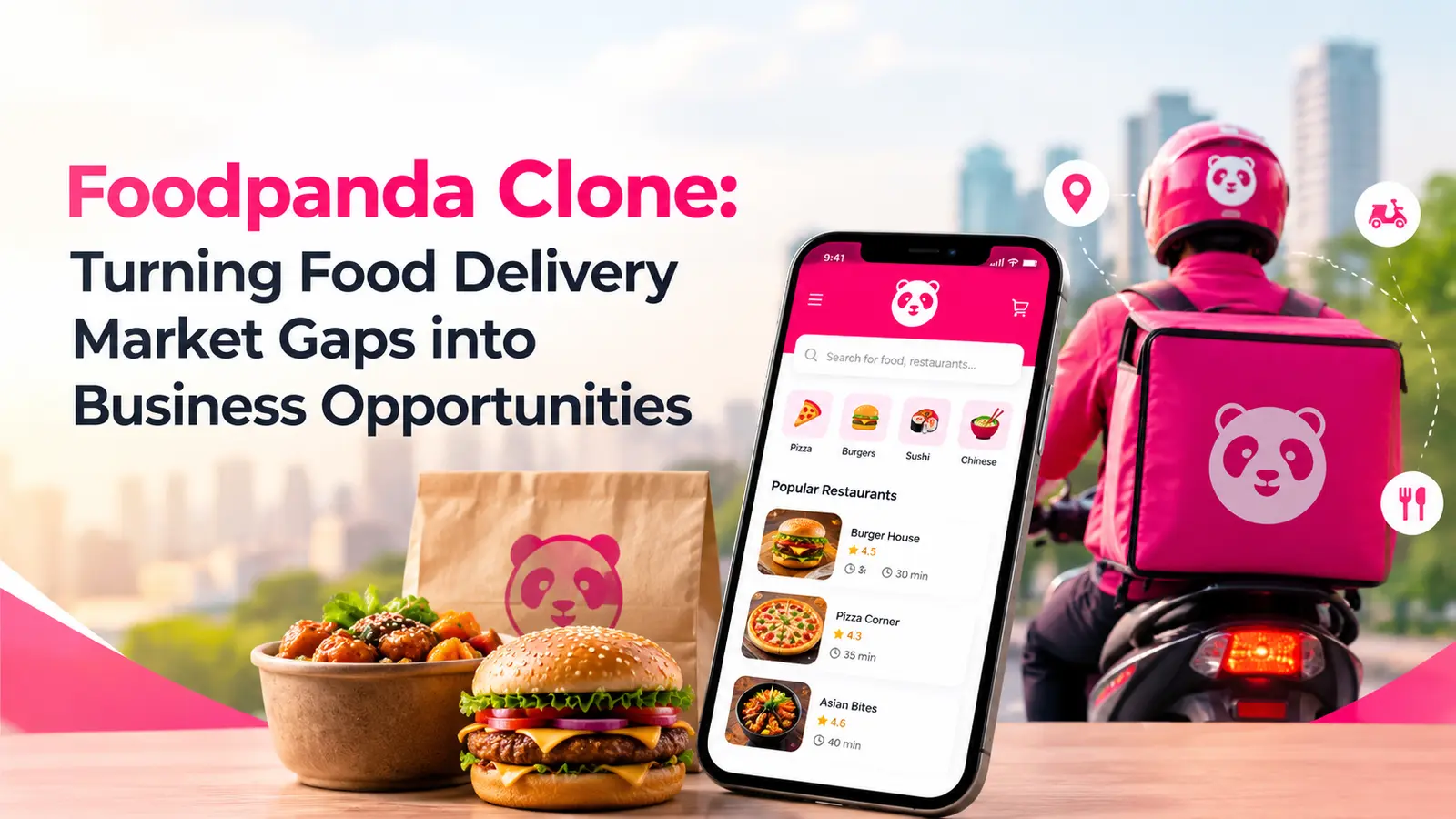
For entrepreneurs, these gaps can represent practical entry points. A Foodpanda Clone solution offers a technological starting point for building a branded food delivery platform tailored to a defined market, customer segment, or geographic area.
The business question is not whether another food delivery application is needed. It is whether a new platform can solve a specific problem better than the alternatives available to its target customers.
Food consumption patterns create distinct ordering opportunities throughout the day. Office workers need dependable lunch options, students often look for affordable meals, and families may prefer convenient dinner combinations. Businesses that understand these patterns can design services around predictable demand rather than relying exclusively on spontaneous orders.
Consider an entrepreneur launching a delivery service in a business district. Instead of competing for every type of order, the platform could partner with nearby restaurants to offer scheduled lunch deliveries, group ordering, and prepaid meal packages.
This approach could help restaurants plan preparation and help delivery operators coordinate orders more efficiently. It also gives customers a clear reason to use the platform repeatedly.
The same principle can be adapted to university areas, residential communities, industrial zones, and smaller cities where ordering preferences and service expectations differ.
Restaurant availability does not automatically translate into a satisfying customer experience. When users encounter lengthy menus, irrelevant recommendations, or unclear delivery estimates, they may abandon their orders or return to familiar alternatives.
A new platform can differentiate itself by making food discovery more useful. Cuisine-based navigation, transparent pricing, reliable availability information, dietary filters, and recommendations based on relevant preferences can simplify decision-making.
AI-assisted discovery may provide additional value when it helps customers identify suitable meals or supports personalized promotions. However, businesses should prioritize accurate menu information and relevant recommendations before investing in complex features.
For regional platforms, showcasing local cuisines and independent food brands can create an additional advantage. Customers gain access to distinctive choices, while participating businesses receive a channel for reaching new buyers.
A food delivery platform can generate substantial order activity and still struggle financially if the cost of completing each transaction is too high.
Long delivery distances, rider downtime, restaurant preparation delays, failed deliveries, refunds, and excessive discounts can reduce margins. These challenges become particularly important when a business expands into new service areas.
Entrepreneurs should begin by defining manageable delivery zones and partnering with restaurants located close to their initial customer base. Order assignment, delivery tracking, route planning, and preparation-time visibility can then support more coordinated operations.
Performance should be assessed through measurable indicators, including:
Delivery cost per completed order.
Average order value and contribution margin.
Order cancellation and refund rates.
Customer acquisition cost.
Repeat purchase rate and delivery completion time.
These indicators provide a clearer picture of business health than download counts or total orders alone.
Promotional campaigns can help attract initial users, but a business that depends on continuous discounts may find it difficult to build sustainable margins.
Retention strategies should reflect actual customer needs. A platform targeting professionals could offer weekday meal packages, while family-focused services might provide bundled orders. Points-based rewards, referral programs, personalized offers, and subscription benefits can also encourage repeat usage when their economics are carefully managed.
Reliability remains essential. Accurate delivery estimates, responsive support, secure payments, and consistent restaurant quality help build confidence in the platform.
Rather than measuring success by the number of promotions redeemed, operators should assess whether these initiatives increase repeat orders and customer lifetime value at an acceptable cost.
Once the business opportunity is defined, technology becomes the infrastructure that supports execution.
A Foodpanda Clone solution can provide a foundation for a branded platform connecting customers, restaurants, delivery partners, and administrators. Depending on the chosen product and customization scope, the system may include customer ordering, restaurant dashboards, delivery management, payment integrations, order tracking, and operational reporting.
Before selecting a solution, business owners should evaluate scalability, localization, payment compatibility, security, third-party integrations, and the ability to modify workflows as demand changes.
A ready-made platform can reduce the need to develop every standard component from the beginning. However, it does not replace market research, restaurant acquisition, customer marketing, or the operational discipline required to run a delivery business.
The strongest starting point for a new food delivery venture is a clearly defined customer group, an identifiable service gap, and a realistic plan for acquiring and retaining orders.
A Foodpanda Clone App can support this strategy by providing the technological foundation for a customized food delivery operation. The competitive advantage, however, must come from the business itself: understanding local demand, building productive restaurant relationships, managing delivery economics, and creating a service customers have a reason to use again.
In a competitive industry, sustainable growth begins not with copying an established platform's scale, but with solving a specific market problem and building outward from there.


Share this page with your family and friends.