The lens you choose can change the way a story feels before the audience even notices why. A documentary may need to place a person naturally within their surroundings. A travel film has to make viewers feel the scale of a location. A commercial, meanwhile, may need a carefully controlled frame where every visual element has a purpose. The camera body matters, but the lens often decides how much of that story actually fits into the frame.
Start with the story
For documentary work, flexibility is usually more valuable than chasing a particular visual style. Filmmakers often work in unpredictable spaces where stepping back is not always possible. A wider focal length can help retain the relationship between a subject and their environment without requiring the camera operator to move too far away.
That is where a 20mm perspective can be useful. It gives filmmakers room to establish context while still keeping the subject visually connected to the scene. For travel films, the same approach works well when architecture, landscapes or crowded streets are part of the story rather than simply the background.
When low light becomes part of the challenge
Available light can completely change how a shoot unfolds. Documentary crews may find themselves filming indoors, at dusk or in locations where carrying additional lighting is impractical. Travel filmmakers face similar situations when moving between changing environments.
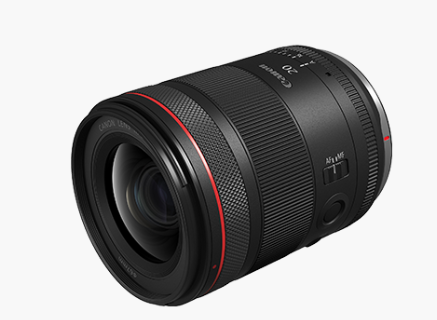
A wide f/1.4 aperture can help in these conditions by allowing more light to reach the sensor. The Canon RF20mm f/1.4L VCM combines that large aperture with an ultra-wide perspective, making it particularly relevant when filmmakers want to maintain a wider composition without immediately having to compromise in lower-light situations.
Source
For commercial work, control matters
Commercial filmmaking often involves deliberate camera movement, controlled focus and carefully considered transitions. Autofocus behaviour can become important when the subject is moving through the frame or when the filmmaker needs focus changes to happen without distracting mechanical noise.
The Voice Coil Motor in the RF20mm f/1.4L VCM is designed for fast, silent autofocus, which makes it well suited to filmmaking situations where sound and focus response both matter. The lens also includes physical iris control, giving filmmakers a direct way to adjust aperture during shooting.
Look beyond the widest possible frame
Going wider is not automatically better. A very wide lens should have a reason to be there. Use it when the environment contributes to the story, when you need to work in confined spaces, or when scale and perspective are important to the visual.
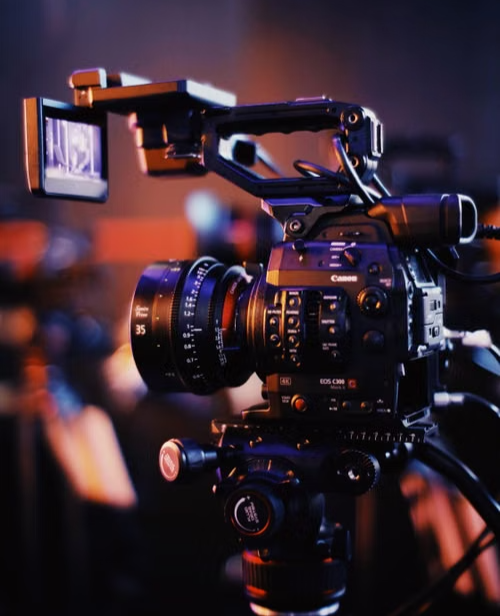
For a professional videography camera setup, that makes lens selection less about owning the biggest collection and more about knowing what each focal length contributes. The RF20mm f/1.4L VCM also uses 11 circular aperture blades to produce a softer, cinematic bokeh when the shooting situation calls for it. Its lightweight, dust- and drip-resistant construction adds another practical consideration for filmmakers working across demanding locations.
The strongest lens choice is usually the one that gives the filmmaker enough room to tell the story without making the lens itself the story.






Share this page with your family and friends.