


Site Tour with Test Users
Choose a test user to login and take a site tour.
Choose a test user to login and take a site tour.


14 minutes, 8 seconds
-16 Views 0 Comments 0 Likes 0 Reviews
What Types of Cartons Can an Automatic Box Folder Produce?
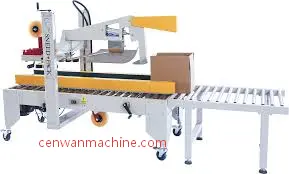
Carton design is closely connected to product protection, packaging appearance, storage, and the final packing process. A manufacturer producing medicine boxes may use a different carton structure from a factory making large corrugated packaging or cosmetic gift boxes. An Automatic Box Folder helps convert flat paperboard blanks into folded and glued cartons, while cenwanmachine offers equipment configurations for several packaging applications. Understanding the available carton styles is an important starting point when choosing machinery. So, which types of cartons can this equipment produce?
Straight-Line Cartons for Everyday Product Packaging
Straight-line cartons are widely used in retail and consumer product packaging because their structure is relatively simple and practical. A typical blank contains several creasing lines, folding panels, and a side seam. During production, the machine folds the designated panels and applies adhesive to the joining area, forming a carton that can be stored flat before being assembled for packaging.
This style is commonly found in cosmetic boxes, pharmaceutical cartons, food packaging, personal care product boxes, and small retail packages. Its straightforward construction makes it suitable for manufacturers handling repeated orders with consistent carton specifications. The finished package can also be designed with different printing, surface finishes, and dimensions according to the product and brand requirements.
The feeding section first delivers individual blanks into the machine. Guide plates and conveying belts help maintain their position as they move through the folding process. The folding components then guide the panels along their creasing lines, while the gluing unit applies adhesive to the required seam. Proper alignment throughout these stages helps prevent problems such as uneven edges, misplaced folds, and inconsistent carton shapes.
CENWAN provides a full automatic four-fold folder gluer designed for straight-line cardboard boxes, including small packaging formats such as cosmetic and medicine cartons. When evaluating this type of equipment, buyers should compare the carton dimensions and board specifications with the working range of the selected model.
Lock-Bottom Cartons for Convenient Assembly
Lock-bottom cartons use specially arranged flaps to create a base that locks into position when the box is opened. This construction is useful when a package needs a formed bottom without requiring the operator to manually assemble every base during product packing. Depending on the carton design, the locking structure can support the packaged item and make the packing process easier to organize.
These cartons are used in various retail, cosmetic, food, and e-commerce packaging applications. Their suitability depends on the product weight, board material, carton dimensions, and the design of the bottom flaps. Manufacturers should consider these factors before deciding whether a lock-bottom structure is appropriate for a particular product.
The production process involves several coordinated folding movements. The bottom panels must be guided into the correct positions, and the machine needs to apply adhesive at the designated areas. If the blank enters the machine at an incorrect angle or the folding components are not adjusted to the carton drawing, the bottom flaps may not connect as intended.
For this reason, a machine designed for straight-line cartons should not automatically be assumed to handle every lock-bottom design. CENWAN offers a full servo lock-bottom folder gluer for straight-line and bottom-lock carton production. Buyers can provide their carton drawings and material details to check the applicable machine configuration before purchasing.
Four-Corner and Six-Corner Cartons for Special Structures
Four-corner and six-corner cartons require additional folding operations compared with standard straight-line boxes. Their corner panels must move in a planned sequence so that the finished carton forms the required shape. These structures are used in selected cosmetic, pharmaceutical, food, and consumer product packaging projects where the box design needs defined corners or a particular appearance.
The folding process depends on the layout of the flat carton blank. Each corner panel has a specific position and folding direction, so the feeding system must keep the material properly aligned before it reaches the relevant folding components. The gluing system must also apply adhesive at the correct locations to connect the carton sections.
Although four-corner and six-corner cartons may look similar in product photographs, their unfolded layouts can be quite different. The number of panels, their dimensions, and the sequence of movement all affect the machine configuration. A buyer should therefore provide a complete carton drawing rather than relying only on a finished-box photograph.
CENWAN's automatic 4-6 corner folder gluer is designed for straight-line, bottom-lock, four-corner, and six-corner cartons. Its product information describes a servo-controlled system for handling these structures. The actual carton range should still be confirmed against the model specifications and the dimensions of the buyer's packaging design.
Corrugated Cartons for Transport and Product Protection
Corrugated cartons are commonly used when packaging needs a board structure suited to storage, handling, or transportation. Unlike lightweight folding cartons used for many small consumer products, corrugated packaging can involve different flute structures and board thicknesses. These material characteristics influence how the carton moves through the feeding and folding sections.
Straight-line corrugated cartons are used for various shipping and product packaging tasks. Some designs use crash-lock bottoms or snap-lock structures, while others require special folding arrangements according to the packaged product. The carton blank, crease positions, and board construction should all be considered when selecting a folder gluer.
During processing, the machine must feed the corrugated blank without disturbing its position. The folding components then guide the panels along the intended creases, while the gluing section connects the required surfaces. Incorrect pressure, unsuitable settings, or poor blank quality can affect the final carton shape, so production trials are useful when introducing a new board specification.
CENWAN's corrugated box folder gluer range includes equipment for straight-line cartons, crash-lock bottom cartons, snap-lock bottom cartons, four-corner and six-corner cartons, and selected special designs. Since different models support different board structures and dimensions, manufacturers should confirm the material range and carton layout with the supplier.
Special-Design Cartons for Customized Packaging
Some packaging projects require structures that do not follow conventional carton layouts. A special-design carton may include unusual panel dimensions, additional folding sections, customized flaps, or a shape developed around a particular product. These designs are often used for promotional packaging, retail displays, gift boxes, and products that require distinctive presentation.
The production feasibility of a special carton depends on its unfolded layout. A design may appear simple after assembly but involve several precise folding movements during manufacturing. The position of each crease, the direction of each panel, and the location of the adhesive areas all influence the required machine arrangement.
Before ordering equipment, manufacturers should prepare a technical drawing that shows the complete blank rather than only the finished package. They should also identify the board material, thickness, carton dimensions, adhesive requirements, and expected production volume. These details allow the supplier to assess whether a standard machine can handle the design or whether additional components are required.
CENWAN's folder gluer product range includes solutions for selected customized cardboard and corrugated carton applications. However, special packaging should be assessed individually. A machine's ability to produce a particular design cannot be established from its general product category alone; the actual structure and technical requirements need to be checked.
Three-Dimensional Cartons for Distinctive Packaging
Three-dimensional cartons are developed around a shaped package structure rather than a conventional flat-folding design. They may be used for cosmetic products, pharmaceutical packaging, underwear boxes, mobile protective film packaging, and selected digital product packages. Their structure can create a distinctive presentation while keeping the packaging components arranged around the product.
The folding sequence is an important part of manufacturing these cartons. Several panels may need to move into specific positions to form the intended shape, and the machine must maintain suitable alignment throughout the process. The adhesive system also needs to match the carton structure so that the connected sections remain in their intended positions.
A conventional straight-line folder gluer may not be suitable for every three-dimensional carton. Manufacturers should check whether the equipment has been designed for the required folding pattern and whether the material and blank dimensions fall within its working range.
CENWAN offers a full automatic stereo box folder gluer for three-dimensional carton applications. Buyers considering this type of machine can provide a sample, CAD drawing, board information, and production expectations to discuss the required configuration. This step is particularly useful when the carton has an unusual shape or a folding sequence that differs from standard retail boxes.
Choosing a Machine According to the Carton Design
The carton structure should be the first consideration when selecting folding and gluing equipment. Straight-line boxes, lock-bottom cartons, multi-corner packaging, corrugated shipping cartons, and three-dimensional boxes do not all follow the same production process. Their folding components, feeding requirements, adhesive positions, and adjustment methods can vary considerably.
Material compatibility is equally important. Paperboard and corrugated board have different physical characteristics, and their thickness can affect feeding stability, folding pressure, and the way panels move through the machine. Buyers should check the supported board range for the specific model instead of assuming that every machine in the same product category handles identical materials.
Production arrangements also deserve attention. A factory processing several carton designs may need convenient changeover arrangements, while a manufacturer producing one established carton style may focus on stable operation and integration with existing equipment. The available workshop space, operator training, maintenance access, and downstream packing process should also be considered.
When communicating with a machinery supplier, it is useful to prepare the unfolded carton drawing, finished-box sample, board specifications, adhesive requirements, and expected production volume. These materials provide a practical basis for checking machine suitability and discussing possible configurations.
Packaging manufacturers planning to produce straight-line cartons, lock-bottom boxes, corner cartons, corrugated packages, or three-dimensional designs can explore the CENWAN product range according to their actual production needs. For projects involving shaped packaging, an Automatic Box Folder can be selected according to the carton structure, folding sequence, and material specifications. Buyers can visit https://www.cenwanmachine.com/ to examine CENWAN's full automatic stereo box folder gluer and discuss their carton samples, technical drawings, and production requirements with the company. This allows each packaging project to be evaluated according to its actual manufacturing conditions before the equipment configuration is finalized.



Share this page with your family and friends.