


Site Tour with Test Users
Choose a test user to login and take a site tour.
Choose a test user to login and take a site tour.


11 minutes, 13 seconds
-38 Views 0 Comments 0 Likes 0 Reviews
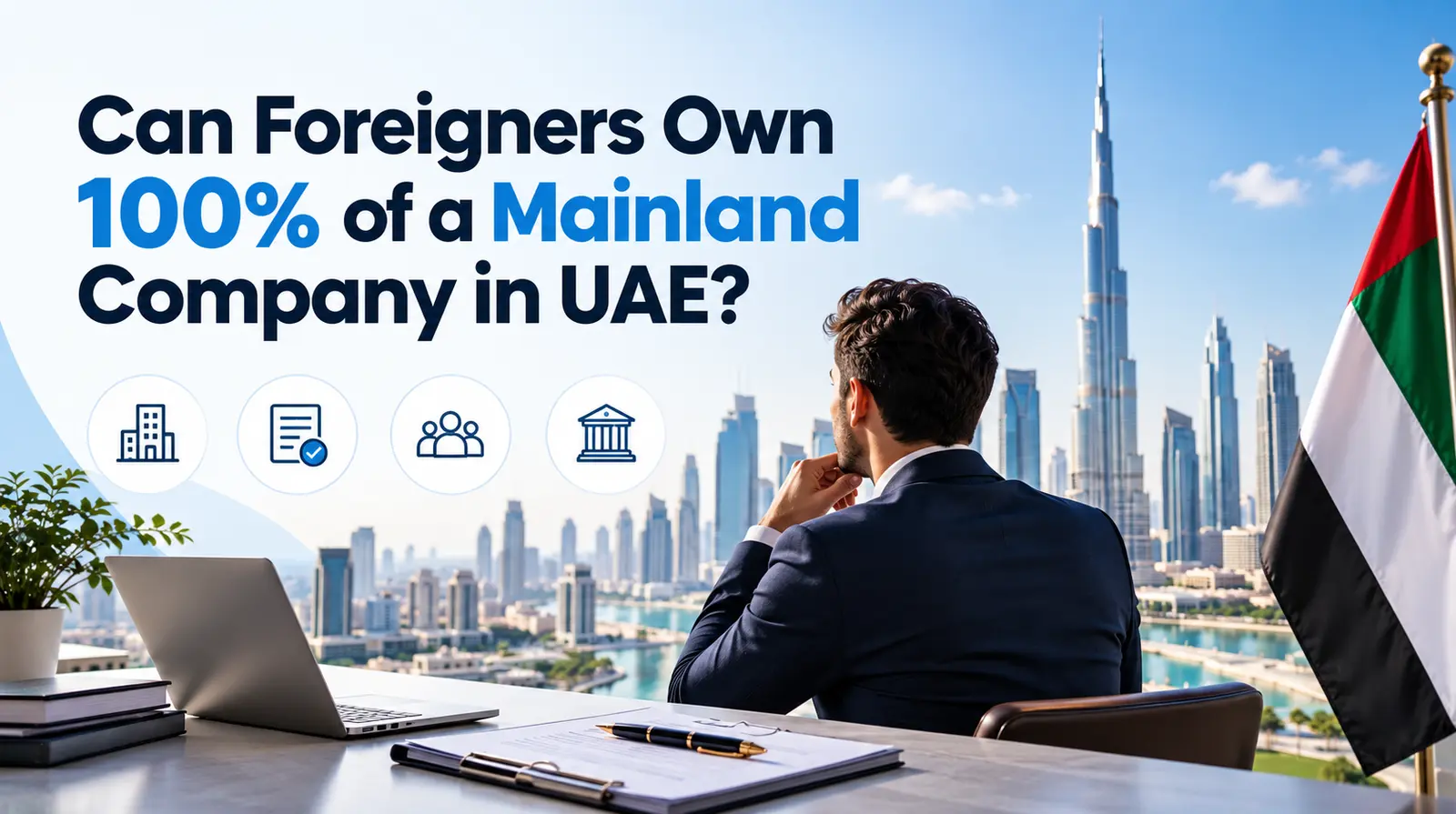
Foreign entrepreneurs can own 100% of many mainland companies in the UAE without an Emirati shareholder. Changes to the UAE's Commercial Companies Law opened most business activities to full foreign ownership, making mainland company formation more accessible to international investors. However, some strategic activities remain subject to specific ownership rules and regulatory approvals.
If you are considering mainland company formation in UAE, it is important to understand the ownership rules, licensing requirements, and registration process before investing. Your eligibility depends on the business activity, legal structure, and relevant licensing authority.
This guide explains how foreign ownership works, what entrepreneurs should consider, and how to prepare for setting up a mainland company in Dubai or Abu Dhabi.
Previously, many mainland commercial companies required a UAE national to hold at least 51% of the shares. Legal reforms introduced in 2020 changed this framework, allowing foreign investors to own 100% of companies across most economic activities.
Today, foreign entrepreneurs can establish wholly owned mainland businesses in many sectors, subject to applicable laws and licensing conditions.
Full foreign ownership can allow investors to retain control over company decisions, business strategy, and profit distribution according to the company's legal documents and applicable law.
However, 100% ownership does not mean every business activity has identical requirements. Some activities need additional approvals, and certain strategic sectors have specific restrictions. Entrepreneurs should confirm their proposed activity's eligibility with the relevant authority before registering.
Many activities across trading, consultancy, technology, manufacturing, and professional services may qualify for 100% foreign ownership. However, eligibility depends on the exact licensed activity and the relevant authority's rules.
Certain strategic sectors can involve additional restrictions or approvals. These include security and defence, telecommunications, and specified financial activities. Commercial agencies and other regulated activities may also have separate requirements.
Before beginning business setup in Dubai mainland, entrepreneurs should:
Identify the exact business activity they intend to conduct.
Check whether full foreign ownership is permitted for that activity.
Confirm whether additional government approvals are necessary.
Select a legal structure that supports the intended operations.
Review any special licensing conditions that apply.
These checks can help prevent delays and reduce the risk of selecting an unsuitable company structure.
The process of mainland company setup in Dubai depends on the business activity and legal form. In general, entrepreneurs need to complete several steps before they can begin operating.
Choose a business activity: Define the products or services the company will provide.
Select a legal structure: Determine whether an LLC or another permitted structure suits the business.
Reserve a trade name: Submit a name that meets the licensing authority's requirements.
Obtain initial approval: Complete the required preliminary procedures.
Prepare company documents: Submit identification, ownership information, and constitutional documents where required.
Arrange office requirements: Meet the applicable premises or address conditions.
Obtain the trade licence: Complete the remaining approvals and registration requirements.
Some activities require additional permissions from sector-specific regulators. Requirements, costs, and processing times can differ by activity and emirate. Dubai's official business setup guidance outlines these stages and advises applicants to check ownership eligibility before proceeding.
Full foreign ownership does not automatically guarantee approval for a corporate bank account. Banks assess each application according to their eligibility criteria, compliance procedures, and understanding of the company's business activities.
When arranging business banking in UAE, entrepreneurs may need to provide:
A valid trade licence and incorporation documents.
Passport copies and identification details for shareholders and authorised signatories.
Information about the company's ultimate beneficial owners.
Proof of business address, where required.
Details about the company's activities, expected transactions, and source of funds.
Banks may request additional documents depending on the ownership structure, business model, and applicant's residency status. Opening an account is a separate process from company registration, and approval is not guaranteed.
Entrepreneurs should consider banking requirements early, especially if they expect to receive international payments, work with overseas suppliers, or operate across multiple markets.
Yes, foreign investors can establish wholly owned mainland companies in Abu Dhabi for many eligible business activities. However, ownership conditions and licensing requirements depend on the proposed activity and the relevant authority's regulations. Some strategic activities require additional approvals or specific ownership arrangements.
For company setup in Abu Dhabi, entrepreneurs should identify the relevant licensing authority, check foreign ownership eligibility, and confirm whether their business requires sector-specific approvals.
They should also evaluate office requirements, registration fees, visa needs, and ongoing compliance responsibilities before committing to a particular structure.
Although the general framework for foreign ownership applies across the UAE, the registration process and activity-specific conditions may differ between emirates. Therefore, investors should verify local requirements rather than assume that every activity follows identical rules in Dubai and Abu Dhabi.
Full ownership can offer several practical advantages for eligible businesses.
Greater decision-making control: Foreign investors can retain control over business strategy and management, subject to applicable laws and company documents.
Clearer ownership arrangements: A wholly owned company does not require an additional shareholder solely to satisfy a general ownership requirement where full foreign ownership is permitted.
Flexible business planning: Entrepreneurs can structure operations around their commercial goals and preferred management arrangements.
Direct participation in business growth: Owners can make decisions about expansion, reinvestment, and profit distribution within the applicable legal framework.
Access to mainland markets: Mainland companies can generally serve customers across the UAE within the scope of their licences and applicable regulations.
These advantages do not remove the need to comply with licensing, tax, employment, and other regulatory obligations.
Before proceeding with mainland company formation in UAE, review the following points:
Business activity: Confirm that the activity is permitted and eligible for full foreign ownership.
Legal structure: Choose a structure that matches your ownership and operational requirements.
Total costs: Account for licensing, office arrangements, government fees, renewals, and other expenses.
Documentation: Prepare the necessary shareholder, identification, and company records.
Banking requirements: Check which banks may consider your company profile and what documents they require.
Ongoing compliance: Understand applicable tax registrations, reporting duties, and licence renewal requirements.
Getting these details right before registration can help you make informed decisions and plan for the costs of running a company.
Foreign entrepreneurs can own 100% of many mainland businesses in the UAE, subject to the relevant activity and regulatory requirements. Understanding ownership conditions, selecting an appropriate legal structure, and preparing the necessary documents are important steps before registration.
For entrepreneurs considering mainland company formation in Dubai or Abu Dhabi, reviewing the applicable licensing rules, setup costs, and compliance obligations can help clarify the process. Resources from DiamondRock can provide further context on UAE business setup options and the requirements involved in company formation.
1. Can foreigners own 100% of a mainland company in the UAE?
Yes, foreign investors can own 100% of many UAE mainland companies. However, eligibility depends on the business activity, legal structure, and applicable regulations.
2. Is a local sponsor required for mainland company formation in the UAE?
A local sponsor is not generally required for activities that permit 100% foreign ownership. Certain regulated or strategic activities may have specific ownership requirements.
3. What documents are required to establish a mainland company in the UAE?
Common requirements include passport copies, trade name details, initial approval, and company formation documents. Additional documents or approvals may be necessary depending on the business activity and legal structure.
4. Can foreign entrepreneurs establish a mainland company in Dubai or Abu Dhabi?
Yes, foreign entrepreneurs can establish mainland companies in both emirates, subject to the relevant licensing requirements, ownership rules, and approvals.
5. Can a foreign-owned mainland company open a business bank account in the UAE?
Yes, eligible foreign-owned companies can apply for a UAE business bank account. Banks assess each application based on company documents, ownership details, business activities, and compliance requirements. Approval is not guaranteed.



Share this page with your family and friends.