


Site Tour with Test Users
Choose a test user to login and take a site tour.
Choose a test user to login and take a site tour.


9 minutes, 10 seconds
-122 Views 0 Comments 0 Likes 0 Reviews
Something interesting is happening in the Middle East…
Companies are moving away from conventional payment options and exploring crypto payment gateways to improve transaction speed and convenience.
But what’s causing this change?
The answer is simple: Companies seek more efficient solutions to satisfy customers who require instant payments with minimal hassle.
The statistics indicate a huge growth in the process. In the period between 2023 and 2024, over $338 billion was transacted via cryptocurrencies in the MENA region.
And this is only the beginning. As more firms adopt crypto payment technologies, the need for a strong crypto payment processing system among businesses in the Middle East will continue to grow.
So, if you wish to develop a crypto payment mechanism, it is the right time to learn how to create it.
The following article provides all the necessary information on the development of a new crypto payment system.
Before you start building a crypto payment gateway, there’s one important area you need to understand: regulatory compliance.
Compliance plays a major role in the success of any crypto payment solution. Since regulations around digital assets can vary from one Middle Eastern country to another, businesses need to plan carefully and ensure their platform follows the required legal guidelines.
A well-built crypto payment gateway needs to meet regulatory expectations to create a secure and trustworthy environment for businesses and users.
Some important compliance areas to consider include:
KYC (Know Your Customer) procedures: verifying user identities to prevent misuse of the platform.
AML (Anti-Money Laundering) compliance: monitoring transactions and reducing risks related to illegal financial activities.
Transaction monitoring: tracking payment activities to identify suspicious behavior.
Data privacy requirements: protecting customer information and maintaining secure data handling practices.
Licensing obligations: understanding the approvals and permissions required to operate in specific regions.
Tax reporting: ensuring transactions are recorded properly according to local requirements.
Consumer protection policies: creating transparent processes that protect users and their funds.
Understanding these requirements early helps businesses avoid compliance issues later and creates a stronger foundation for launching a reliable crypto payment gateway.
So, you’ve decided to build a crypto payment gateway. What comes next?
The first thing to understand is that creating a crypto payment solution is not just about allowing customers to pay with Bitcoin, Ethereum, or other digital currencies.
A lot is happening behind the scenes, such as blockchain integration, wallet management, transaction processing, security, and compliance, all of which need to work together to create a smooth payment experience.
For many businesses, building this technology from scratch can be challenging without the right technical knowledge. That’s why partnering with an experienced crypto payment gateway development company can make the process much easier.
A better development partner can help you plan the right solution, build the required features, and create a payment platform that is secure and ready for real-world use.
Check Their Experience
Look for a partner with experience in Blockchain integration, Crypto wallet development, Payment gateway solutions, Digital asset transactions, and Secure payment systems
The right experience helps avoid common mistakes and ensures a smoother development process.
Review Their Previous Work
Before making a decision, check what they have built before.
Look at their previous crypto projects, Blockchain solutions, Case studies, and client feedback
This gives you a better idea of their capabilities and whether they match your business needs.
Choose End-to-End Support
Building a crypto payment gateway involves multiple stages. A reliable partner should support you with Requirement analysis, Platform design, Development, Blockchain and wallet integration, Testing, Post launch support
Having one team manage the complete process makes development easier and more efficient.
Prioritize Security
Security is one of the most important parts of any payment platform.
Your development partner should focus on Secure wallet management, Transaction monitoring, Data protection, Fraud prevention, and compliance requirements
A secure gateway helps build trust with users and protects your business.
Think Long-Term
Your payment gateway should be ready to grow with your business. Choose a partner who can help you add new features, support more cryptocurrencies, and improve the platform as your needs change.
Now that you understand the development process, the next important step is knowing what features your crypto payment gateway actually needs.
A feature rich platform doesn’t just help businesses accept crypto payments; it makes transactions smoother for customers and easier to manage for merchants.
So, let’s look at the must have features that can make your crypto payment gateway business-ready.
i) Multiple Cryptocurrency Support
Customers have different payment preferences, so supporting multiple cryptocurrencies can improve adoption.
A flexible gateway can support popular digital assets such as Bitcoin, Ethereum, Stablecoins, and Other blockchain-based currencies.
ii) Secure Wallet Integration
Wallet integration allows users and businesses to send, receive, and manage digital assets securely.
A better payment gateway should include Secure wallet connections, Transaction verification, Private key protection, and Safe asset management.
iii) Crypto to Fiat Conversion
Many businesses want to accept crypto payments without dealing with price fluctuations.
Crypto-to-fiat conversion allows merchants to receive payments in traditional currencies such as AED, SAR, or USD.
iv) Merchant Dashboard
A simple dashboard helps businesses manage their payment activities in one place.
It can include Transaction tracking, Payment history, Settlement details, and Revenue reports.
v) API and SDK Integration
Businesses often use different platforms to manage their operations. API integration allows crypto payment gateways to connect easily with Websites, Mobile apps, eCommerce platforms, and Business management systems.
vi) Invoice Generation
Automated crypto invoices improve the payment process.
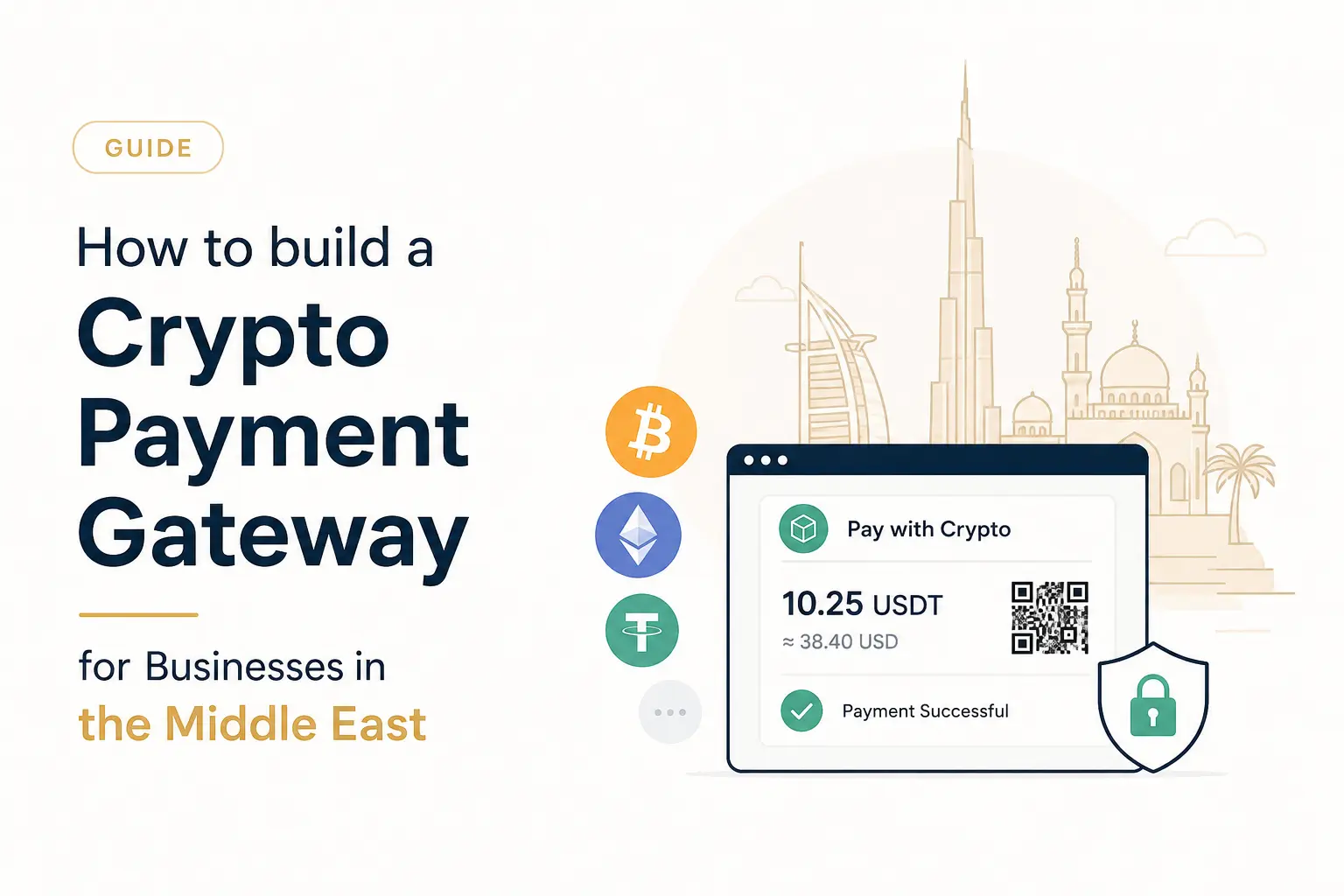
Businesses can create payment requests with QR codes, wallet addresses, expiration timers, and transaction details.
vii) Real-Time Payment Notifications
Instant payment confirmation improves customer experience and allows businesses to process orders without unnecessary delays.
Building a crypto payment gateway for businesses in the Middle East is becoming a valuable opportunity as digital payments continue to grow. Companies that invest in secure and user-friendly payment solutions can improve customer experience, simplify transactions, and prepare for the changing payment landscape.
However, creating a successful crypto payment gateway requires more than blockchain technology. It requires careful planning, strong security, compliance awareness, and a platform designed around real business needs.
For businesses looking to enter the crypto payment space, working with an experienced development partner can help turn the idea into a better payment solution that is ready for future growth.



Share this page with your family and friends.