


Site Tour with Test Users
Choose a test user to login and take a site tour.
Choose a test user to login and take a site tour.


6 minutes, 4 seconds
-13 Views 0 Comments 0 Likes 0 Reviews
Ask a design engineer to name the component most likely to ruin a product launch and the answer will rarely be the gear motor. It will be the controller, the sensor, the battery. The drive gets chosen last, squeezed into whatever space is left, and then asked to perform for years in an enclosure with no airflow and a mounting bracket designed by someone in a hurry. That is the reality behind almost every Compact Gear Motor failure, and it explains why the purchase decision deserves more thought than it usually receives.
The first thing worth understanding is where the heat goes. A compact housing has limited surface area to shed the losses generated during operation, so the material and shape of that housing carry more weight than they appear to. Die-cast aluminum spreads heat across the body efficiently, which keeps the windings cooler during sustained running. Steel is durable but retains heat, a problem in sealed cabinets where air cannot circulate. Plastic housings suit lighter duty work, though they offer less impact protection and tend to magnify gear noise rather than dampen it. Inside the housing, the gearset takes the real punishment. Repeated starts and stops load the teeth in a way steady running never does, and hardened steel resists that wear far better than softer alternatives that run quietly at first and develop backlash later. Zhejiang Province, Ruian Baixiao Machinery Co., Ltd. handles winding and assembly in-house for its zpgearmotor line, which is how gear meshing stays consistent from one unit to the next instead of varying by shift.
Selection usually goes wrong at the very first step, when a buyer picks a drive by torque alone. Mounting geometry deserves priority, because flange dimensions and shaft configuration must match the machine without an adapter plate. Every adapter introduces alignment error, and alignment error transfers load to bearings and gear teeth that were never designed for it. Gear ratio follows from output speed, and over-specifying torque “for safety” produces a drive that runs below its efficient range, wastes energy, and takes up space that was already scarce. The question buyers skip most often is duty cycle. A drive that runs a few minutes a day lives in completely different thermal conditions than one running continuously, and a supplier who asks about duty cycle before quoting is a supplier worth keeping.
Continuous operation near the edge of rated capacity is where compact drives quietly age. Insulation degrades, lubricant thins, gear wear accelerates, and none of it announces itself until the machine stops. Testing a sample under realistic load for an extended period tells a buyer more than any printed figure, and feeling the housing afterward is a crude but honest measurement of thermal margin. Sound is the other diagnostic. A whine under load usually points to misalignment or inadequate lubrication, while a drive that stays quiet through the same conditions suggests tighter manufacturing control and better meshing.
Installation is where good drives get undone. Couplings that tolerate minor angular error help, but nothing compensates for a bracket that flexes under torque. Terminal box orientation matters in cramped enclosures where the wiring has to bend around the housing, and a lubrication point hidden behind three other components will be ignored for the life of the machine. Maintenance access is a design decision, not an afterthought, and drives that are easy to service get serviced.
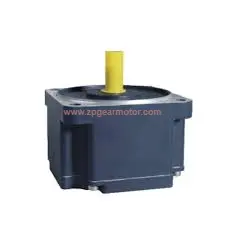
The shape of the housing tells you whether the designer thought about any of this. A profile that follows the gearbox instead of adding decorative volume keeps the unit small and improves cooling. Sealed terminal covers keep dust and moisture away from connections in environments where particles are simply part of the air. Output shafts that match common application requirements avoid custom machining, and mounting holes positioned for real tool access save time on every service call. The zpgearmotor range treats these elements as one system rather than separate line items, which is why the drives hold up in vending equipment, office machines, and light automation where space is tight and a stopped machine costs money by the hour. Buyers comparing options can review how these details come together at https://www.zpgearmotor.com, and applying the same scrutiny to any Compact Gear Motor under consideration is how a purchasing decision made under deadline pressure still turns out right five years later.



Share this page with your family and friends.