


Site Tour with Test Users
Choose a test user to login and take a site tour.
Choose a test user to login and take a site tour.


14 minutes, 37 seconds
-12 Views 0 Comments 0 Likes 0 Reviews
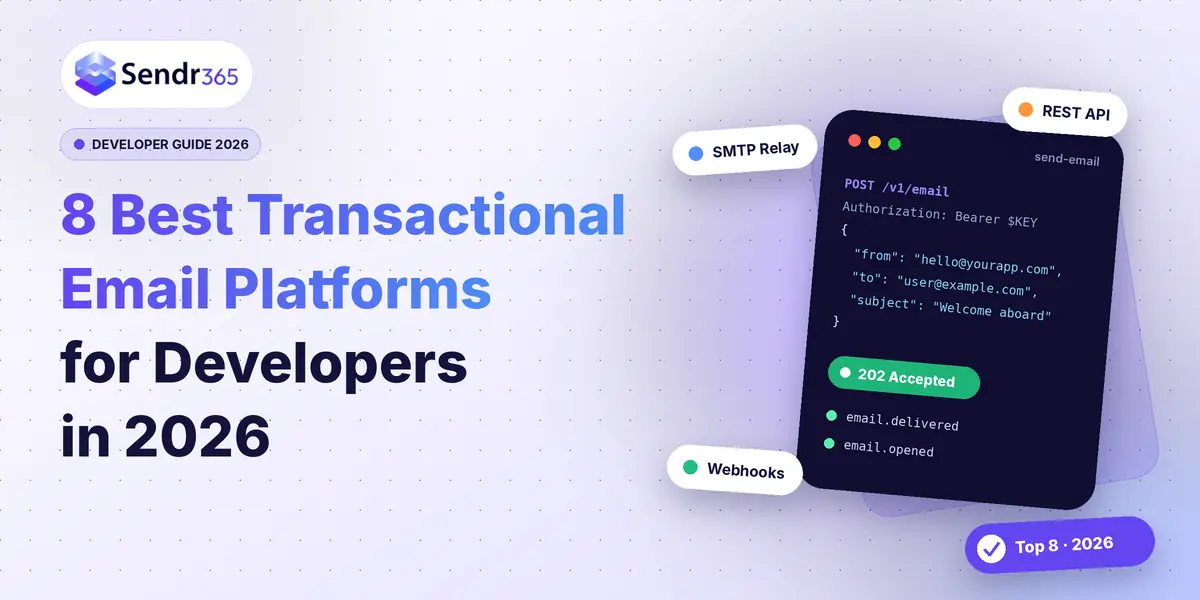
Transactional emails are an essential part of modern websites, mobile applications, and SaaS products. Whenever someone creates an account, requests a password reset, completes a payment, or places an order, they expect to receive an email confirming the activity. Sending these messages manually is not practical for businesses that handle hundreds or thousands of customer interactions. Developers need a reliable system that can connect with their applications and send emails automatically when specific events occur.
This is where transactional email platforms become useful. They provide email APIs, SMTP relay services, and tools that help applications send important notifications to users. However, choosing the right platform can be challenging. Some services focus on developer-friendly APIs, while others offer low-cost sending, email analytics, or combined transactional and marketing features.
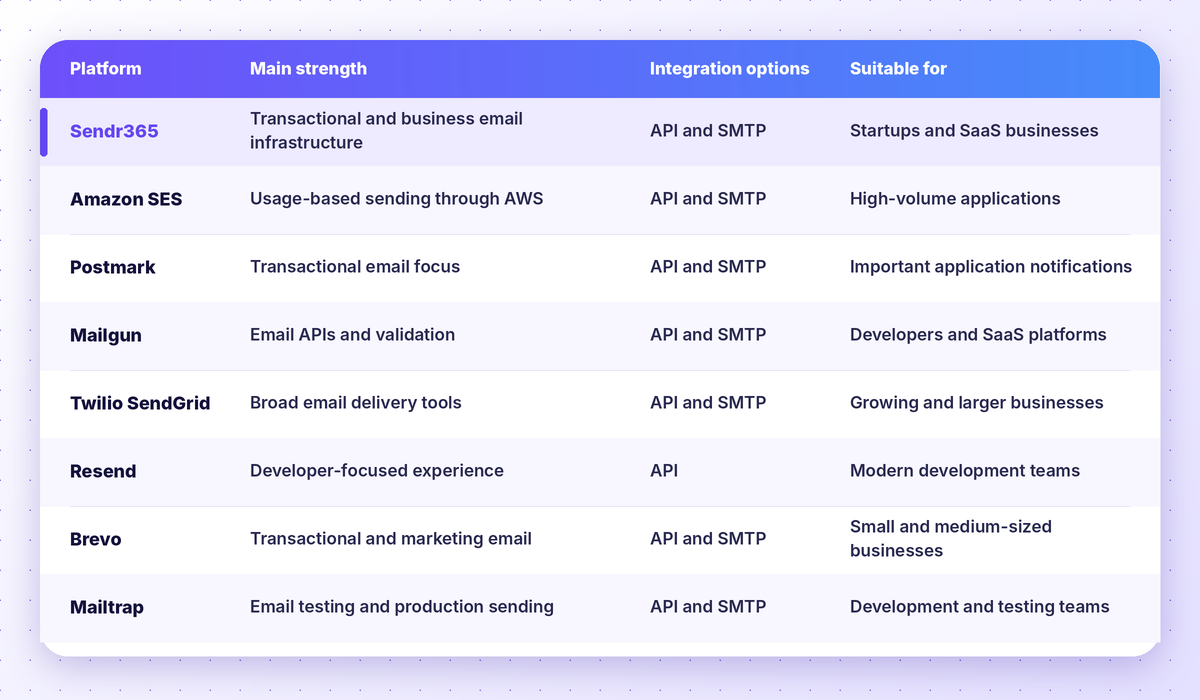
In this article, we compare eight transactional email platforms developers can consider in 2026, along with their key features, ideal use cases, and important selection factors.
A transactional email platform is a service that helps websites and applications send automated emails in response to user actions or system events. Unlike promotional emails, transactional messages usually contain information directly related to a customer's account or activity.
For example, when a customer purchases a product from an online store, the application can automatically trigger an order confirmation email. Similarly, a SaaS platform can send a password reset link when a user requests one.
Common examples of transactional emails include:
Account registration and welcome confirmations.
Password reset and verification emails.
One-time passwords (OTPs) and login alerts.
Order confirmations and payment receipts.
Shipping and delivery notifications.
Subscription and billing updates.
Important account and security notifications.
A transactional email platform connects with an application's backend through SMTP or an email API. This allows developers to automate email communication without manually handling every message.
The following platforms offer different approaches to transactional email sending. The right choice depends on your application, sending volume, technical requirements, and budget.
Sendr365 is an email infrastructure platform that offers SMTP relay and REST API options for businesses, developers, startups, and SaaS applications. Developers can connect their applications with its email services to send transactional messages, including password resets, order confirmations, account verification emails, and application notifications. The platform also supports marketing campaigns and contact management, making it relevant to businesses that manage different types of email communication.
Key features:
REST API for application-based email sending.
SMTP relay for connecting existing applications.
Transactional email sending.
Domain verification and email authentication support.
Contact and campaign management.
Email activity and metrics reporting.
API key authentication and developer documentation.
Best for: Startups, developers, SaaS companies, and businesses looking for SMTP and API-based email sending.
Why consider it?
Sendr365 provides both SMTP and API integration options, allowing developers to select an approach that fits their application. Its combination of transactional and marketing email capabilities can also help businesses manage different communication needs.
Amazon Simple Email Service (Amazon SES) is an email sending service from Amazon Web Services. It allows developers to send transactional and other application-generated emails using APIs or SMTP.
It is commonly used by businesses that already use AWS and want to connect email sending with their existing cloud infrastructure. Amazon SES follows a usage-based pricing model, making it an option for applications that need to manage large email volumes while controlling sending costs.
Key features:
SMTP and API-based email sending.
Integration with other AWS services.
Email sending statistics and monitoring.
Domain and email identity verification.
Support for transactional and bulk email sending.
Postmark focuses on transactional email delivery. It is designed for applications that send messages such as password resets, account verification emails, receipts, and important notifications. One of its useful features is the separation of transactional and broadcast email streams. This helps businesses manage operational messages separately from promotional communication. Postmark also provides email activity information and tools that help developers investigate sending problems.
Key features:
Transactional email API.
SMTP integration.
Separate transactional and broadcast streams.
Email templates.
Message activity and delivery information.
Developer documentation and integrations.
4. Mailgun – For API-Based Email Infrastructure
Mailgun is an email delivery platform that provides APIs and SMTP services for developers. It supports application-generated emails and offers additional tools for managing email activity. Developers can integrate Mailgun with websites, applications, and backend systems to send automated messages. Its email validation and routing capabilities can also be useful for businesses with more advanced email requirements.
Key features:
Email sending API.
SMTP relay.
Email validation tools.
Email analytics and logs.
Inbound email routing.
Domain authentication support.
Twilio SendGrid is an established email delivery platform that supports transactional email sending and marketing communication. Its Email API allows developers to connect applications with an email service and send automated messages. The platform also offers tools for managing email templates, monitoring activity, and handling larger sending requirements. Businesses can use it for account notifications, order updates, password resets, and other application-generated emails.
Key features:
Transactional Email API.
SMTP relay.
Dynamic email templates.
Email activity reporting.
Marketing email capabilities.
Developer libraries and integrations.
Resend is an email platform designed with developer experience in mind. It is particularly relevant to teams building modern applications with JavaScript, TypeScript, React, and related technologies. The platform offers an email API and supports React Email, allowing developers to create email templates using familiar development tools. Its straightforward integration approach can make it easier for development teams to add transactional email functionality to new applications.
Key features:
Developer-focused email API.
React Email support.
Email templates.
Email sending activity and logs.
Domain verification.
Integration with modern development workflows.
Brevo provides email marketing and transactional email services through one platform. It can be useful for businesses that want to manage customer notifications and promotional communication together. Developers can use its transactional email API to connect applications and automate messages. Businesses can also use its marketing tools for campaigns and customer communication.
Key features:
Transactional email API.
SMTP relay.
Email marketing campaigns.
Contact management.
Automation features.
Email reporting and analytics.
Mailtrap provides email testing tools and a production email sending platform. Its testing environment is useful for developers who want to inspect emails before they reach actual recipients. Development teams can use the testing functionality to review message content, links, and formatting. Its production email service also supports transactional email sending through API and SMTP integrations.
Key features:
Email testing environment.
Transactional email sending.
SMTP and API integration.
Email activity and analytics.
Domain authentication support.
Developer-focused tools.
Before selecting a transactional email provider, developers should understand their application's requirements. A platform that works for a small website may not be the best option for a large SaaS application.
Look for a provider that supports the integration method your application needs. An email API can be useful for direct application integration, while SMTP is often convenient for existing systems that already support email server connections.
Compare monthly email limits, additional sending charges, and available plans. Do not select a platform based only on its advertised starting price. Consider how much your application may send as its user base grows.
Check whether the platform supports domain verification and the configuration of SPF, DKIM, and DMARC records. These authentication methods help receiving servers verify authorized senders and protect domain reputation.
Email reporting can help developers understand sending activity and investigate problems. Look for useful information about accepted messages, bounces, and other available email events.
Clear documentation makes integration easier. Review setup instructions, API references, authentication requirements, supported programming languages, and troubleshooting guidance before choosing a provider.
Transactional emails and marketing emails serve different purposes. Choose a platform that allows you to manage these communication types appropriately and follow applicable consent and unsubscribe requirements for promotional messages.
Transactional email platforms help developers connect websites and applications with automated email communication. They make it easier to send password resets, account verification messages, order confirmations, payment receipts, and other important notifications. The best platform depends on your technical requirements and business needs. Amazon SES may suit AWS-based applications that prioritize usage-based pricing, Postmark focuses on transactional communication, Resend offers a developer-focused experience, and Mailtrap provides useful email testing tools.
For businesses looking for SMTP relay and REST API options alongside transactional and marketing email capabilities, Sendr365 is another platform worth exploring. Before making a decision, compare integration options, sending limits, authentication support, reporting features, and pricing. Selecting suitable email infrastructure can help developers build a more manageable email communication system as their applications grow.
The best platform depends on the application's requirements. Developers can compare Sendr365, Amazon SES, Postmark, Mailgun, SendGrid, Resend, Brevo, and Mailtrap based on API support, SMTP integration, pricing, and reporting features.
Transactional emails are triggered by user actions, such as account registration, password resets, and purchases. Marketing emails are promotional messages used to share offers, announcements, and campaigns.
Yes. Developers can connect an application's backend to an email API. The application can then request an email whenever a particular event occurs, such as a successful payment or password reset request.
Neither method is always better. SMTP is useful for applications that already support email server connections, while an API can provide direct integration with application logic. The right option depends on the development environment and project requirements.
SPF, DKIM, and DMARC help receiving email servers verify authorized sending sources and protect domains against certain types of email misuse. Proper authentication is an important part of responsible email infrastructure.
Yes. SaaS applications commonly need automated account verification, password reset, billing, subscription, and security notification emails. Transactional email platforms help developers manage these messages through SMTP or API integrations.



Share this page with your family and friends.