


Site Tour with Test Users
Choose a test user to login and take a site tour.
Choose a test user to login and take a site tour.


11 minutes, 19 seconds
-114 Views 0 Comments 0 Likes 0 Reviews
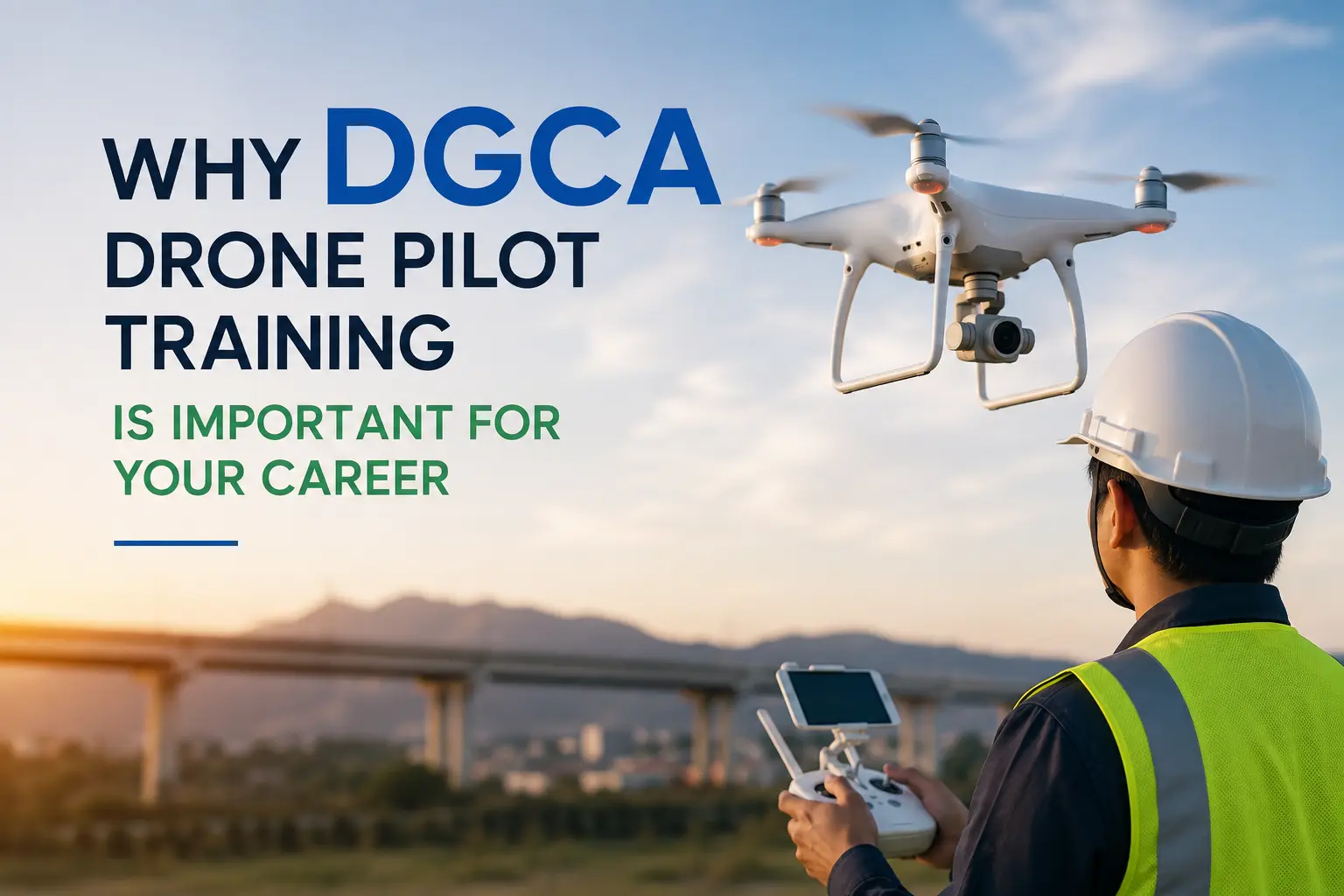
Drones are becoming an important part of many industries in India, including agriculture, surveying, mapping, construction, infrastructure, photography, logistics, and inspection. As the use of drones continues to grow, the demand for trained and responsible drone pilots is also increasing. If you are planning to build a career in this field, DGCA drone pilot training can give you the knowledge and practical skills needed to operate drones safely and professionally.
For beginners, learning to fly a drone may look simple. However, professional drone operations involve much more than controlling a drone with a remote. A trained pilot needs to understand flight procedures, safety practices, airspace rules, weather conditions, emergency situations, and the responsibilities involved in operating an unmanned aircraft.
Here is why proper DGCA-focused drone pilot training can be an important step toward building a career in the growing drone industry.
DGCA stands for the Directorate General of Civil Aviation, India's civil aviation regulator. Drone operations in India are governed by rules and procedures established under the country's aviation framework.
DGCA drone pilot training is designed to prepare aspiring remote pilots with the theoretical knowledge and practical skills required for professional drone operations. Depending on the applicable drone category and training program, students learn about subjects such as drone technology, flight operations, safety, airspace awareness, regulations, weather, and emergency procedures.
The goal is not simply to teach someone how to make a drone fly. It is about developing the knowledge and discipline required to operate a drone responsibly.
Safety should always be the first priority when operating a drone.
A drone can travel at considerable speed and altitude, and careless operation can create risks for people, property, and other aircraft. Professional training helps students understand safe takeoff and landing procedures, pre-flight checks, flight planning, battery management, weather considerations, and emergency responses.
These skills become particularly important when working on commercial projects where mistakes can result in delays, damaged equipment, or safety incidents.
Watching videos online can help you understand basic drone controls, but professional flying requires practical experience.
During structured drone pilot training, students can practice essential flying techniques under supervision. They learn how to control the aircraft, maintain stable flight, follow planned routes, manage different flight situations, and respond to unexpected conditions.
Practical training can make a significant difference for someone who wants to move from casual drone flying to professional operations.
Drone pilots need to understand the rules that apply to their operations. Regulations can cover areas such as airspace, operational restrictions, safety requirements, permissions, and pilot responsibilities.
A proper training course introduces students to the regulatory environment so they are better prepared to make responsible decisions while flying.
This knowledge is particularly useful for professionals who plan to work with companies, government projects, surveying agencies, construction firms, or other organizations where compliance is important.
One of the biggest advantages of developing professional drone skills is the range of industries that use drones.
Depending on your qualifications and additional skills, you may find opportunities in areas such as:
The drone itself is only one part of the technology. Companies also need people who can safely operate drones and collect useful data for business or project requirements.
The drone industry is developing rapidly, and organizations are finding new ways to use unmanned aircraft.
For example, drones can capture aerial images of large construction sites, monitor agricultural fields, inspect difficult-to-reach infrastructure, and collect information for mapping projects.
As these applications increase, employers may prefer candidates who have formal training instead of people who only have basic recreational flying experience.
A recognized training pathway can therefore strengthen your professional profile and demonstrate that you have invested time in developing relevant skills.
A professional drone pilot needs to understand several aspects of flight operations.
Training can introduce students to topics such as:
This broader knowledge helps a pilot make better decisions before, during, and after a flight.
Many beginners feel nervous when they first operate a drone in a professional environment. Flying in an open field for practice is different from completing an actual assignment for a client.
Practical training provides an opportunity to develop confidence while learning under controlled conditions. Students can become familiar with flight controls, different maneuvers, and standard operating procedures.
With regular practice, pilots can become more comfortable handling the aircraft and managing real-world flying situations.
A drone pilot career does not have to remain limited to basic flying.
Once you gain experience, you can develop additional skills in areas such as GIS, photogrammetry, aerial photography, data processing, surveying, inspection, or drone-based mapping. Combining drone operations with an industry-specific skill can make your profile even more valuable.
For example, someone with knowledge of surveying and drone mapping may have different career opportunities than someone who only knows how to operate a drone.
This is why it is useful to look at drone training as the beginning of a professional journey rather than simply a short-term course.
DGCA-focused drone pilot training can be suitable for a wide range of learners. Students, graduates, working professionals, photographers, engineers, surveyors, agriculture professionals, and entrepreneurs may all find drone skills useful depending on their career goals.
It can also be helpful for people who want to explore a new technology-driven career without limiting themselves to traditional office-based roles.
Before joining a course, however, check the institute's current authorization or recognition status, course curriculum, practical training facilities, instructor experience, and the certification process applicable to your intended drone operations.
Choosing the right institute is an important decision. Do not select a course only because it has a low fee or attractive advertisements.
Consider these factors before enrolling:
Training recognition: Check whether the training organization is appropriately authorized or recognized for the training it offers.
Practical flight sessions: Look for a course that provides meaningful hands-on flying experience rather than focusing entirely on classroom theory.
Experienced instructors: Trainers with practical aviation and drone experience can provide useful insights into real-world operations.
Course curriculum: Make sure the program covers safety, regulations, flight operations, equipment, weather, and emergency procedures.
Training infrastructure: A suitable flying area and properly maintained training drones can improve the learning experience.
Career guidance: If your goal is employment, ask whether the institute provides guidance about industry opportunities and additional skills.
The drone industry is creating new possibilities across several sectors, but professional opportunities require more than simply knowing how to operate a remote controller. A strong understanding of aviation safety, regulations, flight procedures, and practical drone operations can help you become a more capable and responsible pilot.
DGCA drone pilot training can be an important starting point for anyone who wants to turn an interest in drones into a professional career. With the right training, practical experience, and additional industry skills, you can prepare yourself for opportunities in surveying, agriculture, construction, mapping, inspection, media, and other emerging drone applications.
If you are serious about entering the drone industry, choose a training institute carefully and focus on gaining genuine practical knowledge rather than simply obtaining a certificate. A strong foundation today can help you adapt as drone technology and professional applications continue to evolve.
Ready to start your drone career? Explore professional drone pilot training with CIGPL Drone Training and take the next step toward developing practical skills for the growing drone industry.


Share this page with your family and friends.