


Site Tour with Test Users
Choose a test user to login and take a site tour.
Choose a test user to login and take a site tour.


8 minutes, 33 seconds
-15 Views 0 Comments 0 Likes 0 Reviews
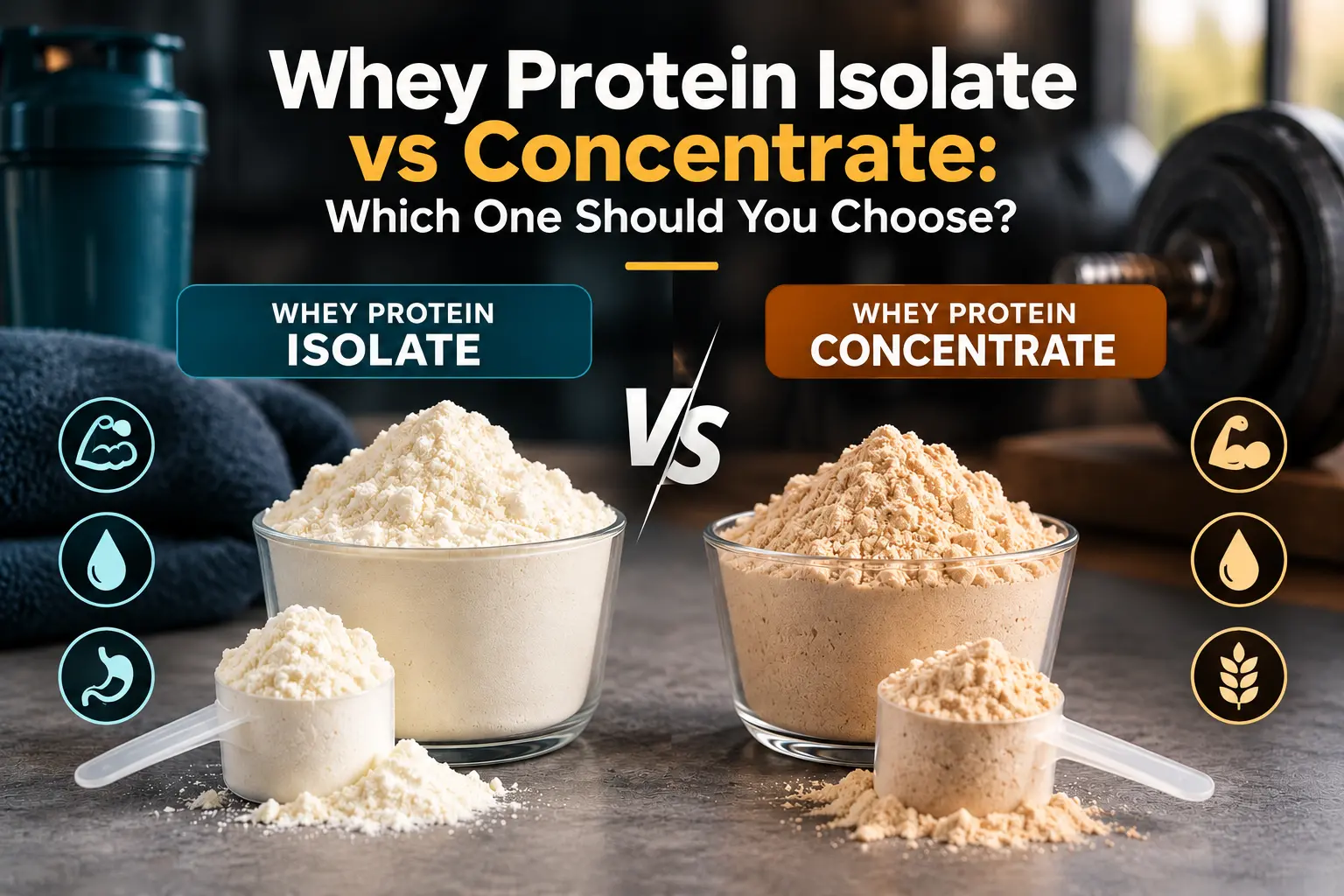
Whey protein isolate has more protein per serving and less lactose, fat, and carbs than whey concentrate. Isolate is typically 90% protein or more by weight, while concentrate is up to about 80%.
Both types support muscle growth similarly when your total daily protein intake and training are on track. Choose isolate if you are limiting lactose, fat, or carbs. Choose concentrate if you want a lower price and digest dairy well.
Below, you will see how the two compare on protein, lactose, muscle gain, and cost, so you can pick the one that fits your goals.
Whey is the liquid left over when milk is made into cheese or yogurt. Manufacturers filter it and dry it into powder.
Whey protein concentrate powder goes through lighter filtration. It contains up to about 80% protein by weight. The rest is mostly carbs, fat, and lactose. That extra content gives concentrate a creamier taste and a lower price.
Isolate goes through extra filtering. This removes most of the fat and carbs, and much of the lactose. Isolate protein powder usually contains 90% protein or more by weight.
It mixes thinner and tastes lighter. Whey protein isolate nutrition labels often show fewer calories, fat, and carbs per scoop.
| Feature | Whey Concentrate | Whey Isolate |
|---|---|---|
| Protein by weight | Up to about 80% | 90% or more |
| Protein per 100 calories | About 18 g | About 23 g |
| Carbs per 100 calories | About 3.5 g | About 1 g |
| Fat per 100 calories | About 1.5 g | Close to 0 g |
| Lactose per 100 calories | Up to 3.5 g | Up to 1 g |
| Processing | Less | More |
| Taste and texture | Creamier | Lighter, thinner |
| Cost | Lower | Higher |
The per-100-calorie figures are an example of a standard comparison. Exact values vary by brand, flavor, and serving size, so always check the label.
Isolate does, by percentage. But the gap per serving is smaller than many people expect.
Take a 30 g scoop as an example. At 80% protein, you get about 24 g. At 90%, you get about 27 g. That is roughly 3 g more per scoop. It matters if you track macros closely. For most people, it changes little.
Isolate is the more cautious choice. Extra filtering removes much of the lactose, so it may cause less bloating and gas.
Concentrate does not rule you out, though. Both types contain little lactose, and many people with lactose intolerance tolerate either one. Start with a small serving and see how you feel.
Two cautions apply:
If you have a diagnosed allergy or ongoing digestive trouble, talk to a doctor or dietitian first.
Both work. Whey is a fast-digesting, complete protein that supplies all the essential amino acids. Both types have nearly identical amino acid profiles because they come from the same protein.
Research does not show strong differences between them when the protein dose is equal. What matters most is your total daily protein intake and consistent resistance training. The International Society of Sports Nutrition suggests 1.4 to 2.0 g of protein per kilogram of body weight daily for most exercising adults. Whey is one convenient way to reach that number.
Isolate does not automatically build more muscle or burn more fat. If concentrate suits your digestion and budget, you will not lose gains by choosing it. Weight loss works the same way. Total calories and overall protein intake drive results, not the type of whey.
It depends on what you need.
Isolate is worth it if you:
Concentrate is the smarter buy if you:
Compare cost per gram of protein, not the price of the tub. You can also take a slightly larger scoop of concentrate to match the protein in isolate, often at a lower price.
What does the highest quality whey protein isolate look like? Price alone will not tell you. Look for a clear protein amount per serving, a short ingredient list, and third-party lab testing.
Work through these questions in order:
Many whey protein powders blend both types, so read the label. Some people also use concentrate most days and isolate when their stomach feels sensitive.
Both are fine for daily use. Concentrate suits most people who tolerate dairy, and it keeps costs down. Isolate suits people with lactose sensitivity or tighter macro goals.
Whichever type you choose, read the label before you buy. Check the protein per serving, the ingredient list, and third-party testing. If you want a place to start browsing whey protein powder, QNT Sport India is one option.
Not in every case. Isolate has more protein per serving and less lactose, fat, and carbs. Concentrate costs less and gives similar muscle-building benefits. The better choice depends on your needs.
Yes. Beginners can use either type safely, unless they have a milk allergy. Start with one scoop a day, see how your body responds, and adjust from there.
Yes, when you pair it with resistance training and enough total daily protein. It supplies high-quality protein your muscles use to repair and grow. It does not work on its own.



Share this page with your family and friends.