


Site Tour with Test Users
Choose a test user to login and take a site tour.
Choose a test user to login and take a site tour.


6 minutes, 51 seconds
-9 Views 0 Comments 0 Likes 0 Reviews
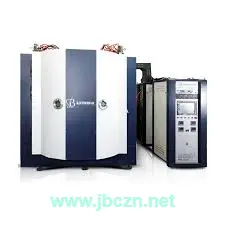
How many cathodes does a typical PVD magnetron sputtering coating equipment system include? This straightforward question reveals surprising complexity when examined across the diverse landscape of thin-film deposition. The simple range of one to four cathodes appears across many systems, yet this number fluctuates dramatically based on intended applications, desired film architectures, and production scale. JBCZN, a manufacturer operating its own Vacuum Engineering Technology Research and Development Center, approaches cathode configuration through functional requirements rather than fixed formulas. Their equipment line demonstrates how cathode count serves as a responsive design parameter, adapting to the specific coating challenges presented by each customer's production environment. Does your operation require the simplicity of a single source or the sophistication of multiple cathodes operating in sequence?
The fundamental relationship between cathode count and coating capability begins with material diversity. Single-cathode systems deposit one material type per run, suiting applications where a uniform film of single composition satisfies the requirement. Dual-cathode configurations enable co-deposition or sequential layering without breaking vacuum, allowing composite films or simple bilayer structures. Systems incorporating three or four cathodes offer expanded possibilities: reactive sputtering with separate metal and oxide sources, graded compositions through variable power ratios, or complex multilayer architectures that would require multiple cycles in simpler equipment. The Chinese-manufactured TRP-450 system, for instance, incorporates three 60mm magnetron cathodes that can operate independently, sequentially, or simultaneously, demonstrating how cathode count translates directly into processing versatility.
Application specificity drives cathode selection with remarkable precision. Decorative coating operations frequently utilise dual-cathode arrangements, enabling rapid alternation between colour-producing layers without chamber venting. Tool coating applications, requiring hard nitride or oxide films, often employ three or four cathodes to deposit adhesion layers, transition zones, and functional top coatings within a single cycle. Research and development systems sometimes include additional cathodes to accommodate experimental flexibility, allowing scientists to test various material combinations without hardware changes. The Fraunhofer FEP pilot plant, for example, incorporates magnetron sputtering alongside electron-beam and plasma sources, showing how cathode count integrates into broader process strategies.
Production scale introduces another dimension to the cathode equation. Small-batch systems like the DXMS-450C model operate effectively with two 4-inch cathodes, sufficient for sample development and low-volume specialised coating. Industrial-scale equipment often expands cathode count to maintain throughput across larger substrate areas, distributing deposition flux uniformly while maintaining acceptable deposition rates. Some production lines incorporate multiple cathodes of the same material to achieve required thickness uniformity over extensive surfaces, demonstrating that cathode count serves both material diversity and production efficiency.
The power configuration accompanying each cathode influences system complexity. Direct current (DC) supplies suit conductive target materials, while radio frequency (RF) power enables dielectric and semiconductor target sputtering. Mid-frequency and pulsed DC options address reactive processes prone to arcing. High-power impulse magnetron sputtering (HiPIMS) requires specialised generators that may limit simultaneous cathode operation. Manufacturers must balance cathode count against available power infrastructure, as each cathode demands dedicated supply capacity. The decision between two cathodes with substantial power and four cathodes with moderate power depends on whether the process prioritises deposition rate or compositional flexibility.
Target dimensions and erosion characteristics affect how many cathodes a system effectively employs. Larger targets require more substantial magnetron assemblies and occupy more chamber floor space, constraining how many fit within a given chamber volume. Rotatable targets, which consume more space but offer extended service life, may reduce the practical cathode count compared to planar designs. The physical arrangement of cathodes around the substrate—whether co-focused on a central position or distributed across the chamber—determines how many sources can operate without interference or shadowing effects.
Pre-cleaning and pre-treatment requirements sometimes utilise cathodes for etching or ion bombardment prior to deposition. Some systems dedicate one cathode position to sputter-etching substrate surfaces, improving adhesion without transferring the work piece to a separate chamber. This integration saves time and prevents surface contamination, though it reduces the number of cathodes available for film deposition. The cathode count thus reflects the complete process sequence, not merely the final film composition.
Maintenance and consumables considerations influence long-term cathode decisions. Each cathode requires periodic target replacement, vacuum seal inspection, and cooling system verification. A system with three cathodes carries approximately three times the maintenance load of a single-cathode unit, though this load is often distributed across scheduled maintenance intervals. Manufacturers like JBCZN design their PVD magnetron sputtering coating equipment with accessibility in mind, recognizing that cathode maintenance frequency affects production uptime and operating costs.
Visit https://www.jbczn.net/ to examine specific configurations and discuss cathode options with their engineering team. The website details equipment specifications that clarify how cathode count interacts with chamber size, power supplies, and target materials. Understanding your film requirements, production volume, and material combinations will guide the cathode selection process. Does your current or planned coating process genuinely need the complexity of multiple cathodes, or would a carefully selected single-cathode system serve your quality and throughput goals while simplifying operation and maintenance?



Share this page with your family and friends.